A physiatrist in a rehabilitation clinic assisting a patient with a gentle mobility exercise on a therapy mat.

Why Your Recovery Might Need a Physiatrist (Not Just a Surgeon)

A physiatrist is a doctor who specializes in Physical Medicine and Rehabilitation (PM&R), treating conditions affecting the skeletal and nervous systems through non-surgical approaches that reduce pain and restore function. These nerve, muscle, bone, and brain experts take a comprehensive view of your health, focusing not just on treating symptoms but on helping you regain the highest possible quality of life after injury or illness.
If you’ve been told you need surgery for back pain, lost …

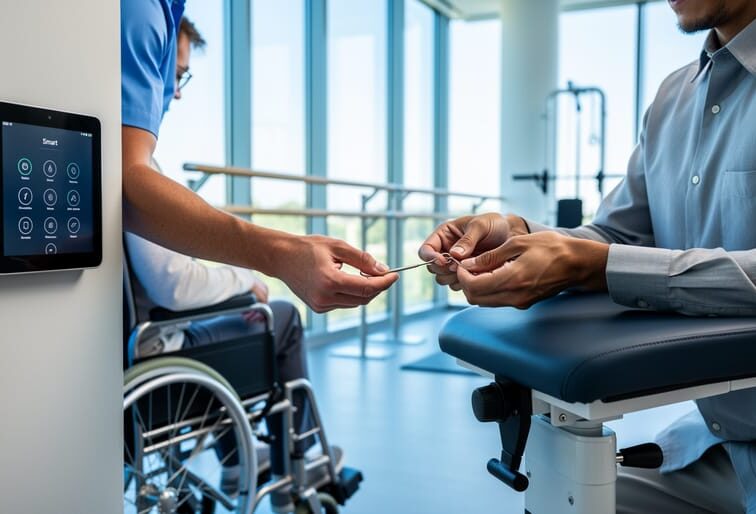
Occupational therapist assisting a wheelchair user with assistive technology and a smart home control setup in a rehabilitation room, with adaptive dressing tools nearby.

How Assistive Technology Is Transforming Lives in Disability and Rehabilitation

Assistive technology transforms the rehabilitation journey for people with disabilities by restoring independence, supporting recovery, and improving daily function through devices ranging from adaptive mobility aids and communication systems to smart home controls and specialized software. These tools work alongside personalized therapy to help individuals regain skills, compensate for limitations, and participate fully in work, education, and community life.
At its core, effective assistive technology in rehabilitation is never one-size-fits-all. The right solution emerges from careful assessment of each person’s abilities, …

An adult sitting by a window at night holding a mug, looking worried and contemplative in a dim, quiet room.

Recognizing PTSD Symptoms: What Your Mind and Body Are Trying to Tell You

Recognizing PTSD symptoms isn’t always straightforward. The intrusive memories, nightmares, and flashbacks that many people associate with post-traumatic stress disorder represent just one dimension of a complex condition that affects approximately 6% of adults in the United States at some point in their lives. If you’re reading this because something feels wrong after a traumatic experience, or because someone you care about seems different in ways you can’t quite name, understanding the full spectrum of symptoms is your first step toward healing.
PTSD manifests through four distinct symptom categories, and you …

Diverse healthcare team—physician, nurse, physical therapist, occupational therapist, and speech-language pathologist—gathers around a seated rehabilitation patient in a sunlit clinic, collaborating with a supportive, professional demeanor; blurred parallel bars and therapy balls in the background.

Meet the People Who Make Recovery Possible: Inside Our Healthcare Team

Recovery from injury, illness, or surgery doesn’t happen in isolation. Your rehabilitation journey involves a carefully coordinated group of specialists, each bringing unique expertise to help you regain independence and improve your quality of life.
The healthcare team assembled for your care represents an interdisciplinary approach that addresses every aspect of your recovery. Rather than working in silos, these professionals collaborate daily, sharing insights and adjusting your treatment plan based on your progress and changing needs. This means your physical therapist communicates directly with your occupational therapist…

Parents at a kitchen table with a small house model, calculator, and receipts, with a child’s wheelchair and therapy ball softly blurred in the background.

Capital Gains Tax on Disability Therapy: What Families Actually Pay

Understand how selling your home or assets to fund disability therapy affects your tax obligations, and get property-specific guidance on selling a house because of illness. Calculate your potential capital gains liability before making any sale decisions, as you may owe tax on profits exceeding £6,000 (or your annual exemption allowance) when liquidating investments or secondary properties to pay for essential rehabilitation services.
Explore claiming disability-related therapy expenses as medical deductions to offset taxable income, though …

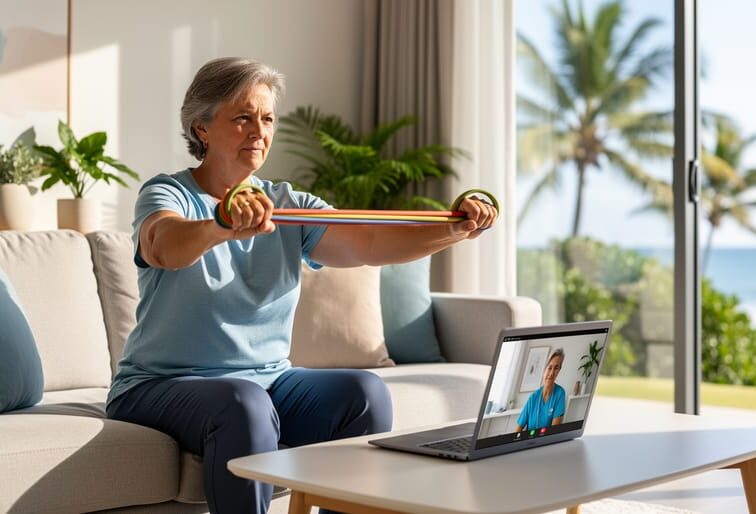
Middle-aged patient in a bright coastal Mackay living room performing resistance-band exercises while consulting a physiotherapist via laptop video call; therapist visible on screen with no on-screen text, airy decor and palms softly blurred in background.

How E-Rehab Is Transforming Recovery for Mackay Patients

Rehabilitation no longer requires you to travel to a clinic every day. E-rehab, or electronic rehabilitation, delivers evidence-based therapy directly to your home through digital platforms, video consultations, and personalized online exercise programs. This innovative approach has transformed recovery for countless patients who face transportation challenges, live in remote areas, or need flexible scheduling around work and family commitments.
When injury, illness, or surgery disrupts your independence, waiting weeks for an appointment or spending hours commuting to therapy sessions can delay your recovery. E-rehab eliminates …

A person sitting in a modern counseling room holding a notebook, representing rehabilitation support and recovery from online gambling addiction.

How Rehabilitation Support Can Help You Break Free from Online Gambling Addiction

Recognize the moment you realize gambling has taken control of your life. Many people discover their turning point when activities like bitcoin plinko or other online betting games shift from occasional entertainment to compulsive behavior that damages relationships, finances, and mental health. That recognition isn’t weakness. It’s the first step toward recovery.
Professional rehabilitation support offers a lifeline designed specifically for your situation. Unlike attempting to quit alone, structured treatment combines multiple therapeutic approaches tailored to address …