
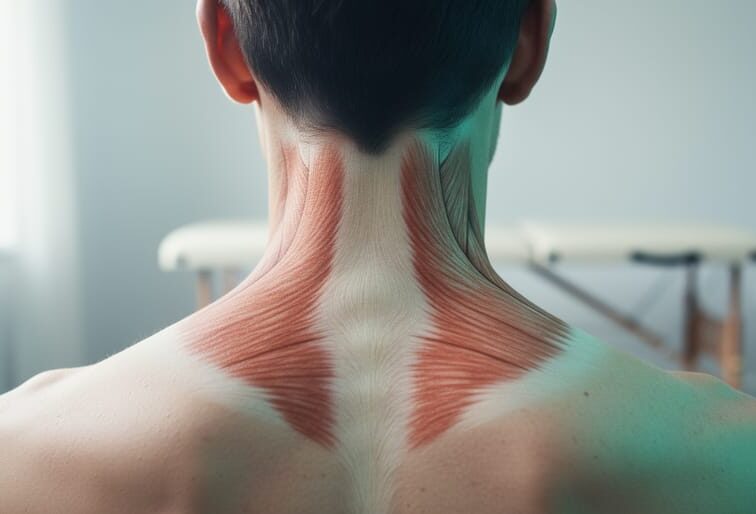

Pain under the neck refers to discomfort or aching in the area where the base of your skull meets the top of your spine and shoulders, often radiating into the upper back or between the shoulder blades. This common complaint affects millions of people and can range from a mild nuisance to a debilitating condition that interferes with daily activities, work, and sleep.
Most people experiencing this pain want to know three things right away: what’s causing it, whether it’s something serious, and what they can do to feel better. The good news is that the majority of cases stem from treatable causes like muscle strain, poor posture, or tension, rather than serious underlying conditions. However, understanding the specific source of your pain is essential for choosing the right treatment approach.
This article will help you identify common causes of pain under the neck, recognize warning signs that warrant immediate medical attention, and understand how comprehensive, personalized rehabilitation can address both the symptoms and root causes of your discomfort. Whether you’ve been dealing with this pain for days or months, an interdisciplinary approach that combines physical therapy, targeted exercises, and postural correction can provide lasting relief and prevent recurrence.
What Pain Under the Neck Means
Pain under the neck refers to discomfort located at the base of your neck where it meets the top of your shoulders and upper back. This area, known as the cervicothoracic junction, sits at the transition point between the lower cervical spine (your neck bones) and the upper thoracic spine (your mid-back). When people experience pain here, they often describe it in various ways depending on the underlying cause.
- Cervical spine
- The seven vertebrae that make up your neck, providing support and flexibility for head movement while protecting the spinal cord.
- Cervicothoracic junction
- The transition zone where your neck meets your upper back, a common site for pain due to the mechanical stress placed on this region during daily activities.
- Referred pain
- Discomfort felt in one area of the body that actually originates from a problem elsewhere, such as neck issues causing pain between the shoulder blades.
- Radicular pain
- Sharp, shooting pain that travels along a nerve pathway, often extending from the neck down into the shoulder, arm, or hand when a nerve root is compressed.
People describe pain under the neck using terms like aching (a dull, persistent discomfort), stabbing (sharp, sudden sensations), burning (a hot, irritating feeling), or stiffness (reduced movement and tightness). This location differs from other neck pain presentations because it sits lower than typical neck strain, which usually affects the mid-neck, and higher than shoulder blade pain. The cervicothoracic region bears unique stress as your neck supports your head while connecting to the less mobile upper back, making it particularly vulnerable to strain from posture, repetitive movements, and everyday activities.
How Pain Under the Neck Develops

Pain develops in the area under your neck when the tissues, structures, and nerves in the cervicothoracic region become irritated, overloaded, or damaged. This junction between your lower neck and upper back is a particularly vulnerable zone because it bears the weight of your head while allowing considerable movement, making it susceptible to strain when the delicate balance between stability and mobility is disrupted.
When muscles in this area are asked to work harder than they should, whether from holding awkward positions or compensating for weak neighbouring muscles, they develop microtrauma. These small tears and overuse injuries trigger an inflammatory response that produces the characteristic aching or burning sensation. Meanwhile, the muscles themselves may go into protective spasm, creating a cycle where tension begets more tension and the pain persists even after the original trigger has passed.
Nerve compression occurs when the spaces through which nerves exit the spine become narrowed, whether from disc bulging, bone spurs, or swelling. When a nerve root is pinched, you might feel sharp, stabbing pain exactly where the compression occurs, or the discomfort may radiate down into the shoulder blade or arm. Joint dysfunction develops when the small facet joints that connect vertebrae become stiff, inflamed, or misaligned, producing localized tenderness and restricted movement that you feel as pain under the neck.
Several factors commonly trigger or contribute to this pain:
- Poor posture, especially forward head position that strains the lower neck muscles
- Repetitive movements like looking down at screens or lifting overhead
- Sudden injury from accidents, falls, or whiplash-type forces
- Prolonged sitting without adequate support or movement breaks
- Stress-related muscle tension that concentrates in the neck and upper back
Understanding these mechanisms helps explain why pain under the neck often responds well to addressing the underlying cause rather than just masking symptoms. Your body is signaling that something in how you move, work, or manage daily demands needs adjustment.
Common Causes and Types
Muscle and Soft Tissue Causes

Muscle and soft tissue problems account for the majority of pain under the neck cases. When you strain the muscles in your lower neck and upper back, often from lifting something heavy, sudden movements, or holding awkward positions, the resulting inflammation creates persistent aching or sharp discomfort that worsens with movement.
The trapezius muscle, which spans your neck and shoulders, frequently develops areas of tightness and tension in its lower fibers. This creates a characteristic deep ache right where your neck meets your upper back. Poor posture during computer work or looking down at phones for extended periods overworks these muscles, leaving them chronically fatigued and tender.
Myofascial trigger points common in this region are tight knots within muscle fibers that refer pain to surrounding areas. You might press on a specific spot under your neck and feel discomfort radiate outward. These develop from repetitive stress, sustained contractions, or compensating for other injuries.
Lifestyle factors play a significant role. Carrying heavy bags on one shoulder, sleeping on your stomach with your head turned, or maintaining static positions for hours all contribute to muscle and soft tissue dysfunction in the lower neck area.
Joint and Structural Causes
When the underlying structure of your neck has changed, whether through wear, injury, or degenerative processes, the pain you feel under the neck can persist even when you’re at rest. Cervical disc problems, such as bulges or herniations at the C6-C7 or C7-T1 levels, commonly affect this lower region because those discs bear significant load during bending and twisting. The disc material can press on nearby nerves, creating sharp or radiating discomfort that worsens with certain movements.
Facet joints, the small stabilizing joints along each vertebra, are another frequent culprit. Research shows that cervical facet joints cause neck pain in a notable portion of chronic cases, particularly when cartilage wears thin or inflammation develops. You might notice stiffness first thing in the morning or a deep ache after holding your head in one position.
Osteoarthritis in the cervicothoracic junction, where your neck meets your upper back, produces bone spurs and narrowing joint spaces that limit mobility and generate grinding sensations. These structural changes don’t appear overnight; they accumulate over years, making the area more vulnerable to flare-ups triggered by simple activities like lifting or reaching overhead.
Nerve-Related Causes
When nerves become compressed or irritated in the cervical spine, pain can manifest specifically at the base of the neck. Cervical radiculopathy occurs when a nerve root exiting the spine gets pinched by a herniated disc, bone spur, or inflamed tissue. This creates a distinct pattern: the pain often radiates down into the shoulder blade, arm, or even into the fingers, following the pathway of the affected nerve.
Unlike muscle-based discomfort, nerve involvement typically produces additional symptoms. You might notice tingling, numbness, or a pins-and-needles sensation traveling down your arm. Some people experience weakness when gripping objects or lifting their arm. The pain quality differs too, it can feel sharp, electric, or burning rather than the dull ache of muscular strain.
Referred pain patterns complicate the picture. Nerve irritation in the lower cervical spine (C6, C7, or C8 levels) commonly presents as pain concentrated just under the neck, even when the actual nerve compression sits slightly higher or lower in the spine. This explains why the location of your pain doesn’t always match the source of the problem, making professional assessment crucial for accurate diagnosis.
Postural and Ergonomic Causes
Modern lifestyle habits place considerable stress on the cervicothoracic junction, creating conditions ripe for pain development. Forward head posture, where your head shifts forward relative to your shoulders, adds roughly ten pounds of pressure for every inch of forward displacement, straining the muscles supporting the lower neck. “Tech neck” emerges from prolonged smartphone or tablet use, forcing these same structures into sustained, awkward positions.
Desk work compounds the problem. Hours spent hunched over a computer create chronic tension in the trapezius and levator scapulae muscles, which attach precisely where you’re experiencing discomfort. Your workstation setup matters enormously: monitor height, chair support, and keyboard position all influence whether your neck maintains healthy alignment or compensates poorly.
Sleeping position contributes too. Pillows that are too high, too flat, or unsupportive allow your neck to settle into positions that stress the cervicothoracic region throughout the night. Stomach sleeping forces extreme rotation. These postural factors often work together, accumulating micro-trauma that eventually manifests as persistent pain under your neck.
When Pain Under the Neck Requires Professional Care
Most pain under the neck improves with rest and simple self-care within a few days. However, certain warning signs indicate you should seek professional evaluation promptly.
Contact a healthcare provider if your pain is severe and not improving after a week, follows an injury or accident, or radiates down your arm with numbness or tingling. Weakness in your arms or hands, difficulty with coordination, or changes in bladder or bowel function require immediate medical attention, as these may signal nerve compression requiring urgent care.
You should also seek help if your pain accompanies fever, unexplained weight loss, or severe headaches, or if you have a history of cancer or osteoporosis. These symptoms can indicate conditions needing medical investigation beyond typical muscle strain.
Even without these red flags, persistent discomfort affecting your daily activities, work performance, or sleep quality warrants professional assessment. A comprehensive evaluation can identify the underlying cause and prevent the development of chronic pain patterns.
Interdisciplinary rehabilitation services become valuable when pain persists or recurs despite initial self-care efforts. A thorough assessment typically includes reviewing your medical history, examining your posture and movement patterns, testing strength and flexibility, and identifying aggravating factors in your daily routine. Based on these findings, a personalized treatment plan addresses your specific needs, whether through clinic-based sessions or convenient in-home physiotherapy services tailored to your circumstances and recovery goals.
How Pain Under the Neck Is Addressed Through Rehabilitation
Physiotherapy Interventions
Physiotherapy forms the cornerstone of effective neck pain management. Treatment begins with manual therapy techniques, skilled hands-on methods that address joint stiffness, muscle tension, and tissue restrictions in the cervicothoracic region. Your physiotherapist applies targeted mobilizations to restore normal movement between vertebrae, releases tight muscles through soft tissue techniques, and reduces nerve irritation through gentle traction or neural mobilization when needed.
Therapeutic exercise builds on this foundation. You’ll learn specific strengthening exercises for deep neck flexors and upper back stabilizers, which support proper alignment and reduce strain on painful structures. Stretching programs target shortened muscles, particularly those affected by prolonged sitting or forward head posture. These exercises become progressively more challenging as your pain decreases and function improves.
Posture correction receives particular attention since alignment directly influences neck pain. Your physiotherapist analyzes how you sit, stand, and move throughout the day, then guides you toward more balanced positions that distribute load evenly across your spine. Movement re-education teaches you to perform daily activities, reaching, lifting, carrying, without aggravating symptoms. This comprehensive approach, tailored to your specific condition and goals, exemplifies personalized recovery that addresses both immediate pain relief and long-term prevention.
Occupational Therapy and Ergonomic Support
Occupational therapy addresses pain under the neck by examining how your daily activities contribute to the problem. An occupational therapist assesses your workspace setup, sleep positions, and routine movements to identify what’s aggravating your symptoms.
Workplace modifications might include adjusting your monitor height to eye level, repositioning your keyboard to keep your wrists neutral, or recommending a chair that supports your lower neck’s natural curve. For home activities, they’ll suggest adaptive techniques for tasks that currently trigger pain, such as how to lift groceries, carry a child, or look down at your phone without straining.
Beyond equipment changes, occupational therapists teach compensatory strategies: breaking up prolonged positions with micro-breaks, using pillows correctly during sleep, and pacing demanding activities. They also help you gradually rebuild endurance for tasks you’ve been avoiding because of pain, restoring your confidence and independence through a personalized, practical approach.
Complementary Approaches
Beyond hands-on therapy, comprehensive rehabilitation integrates approaches that address the psychological and educational dimensions of pain recovery. Pain neuroscience education helps patients understand how pain signals work, reducing fear and anxiety that can amplify discomfort. Learning that pain under the neck doesn’t always indicate tissue damage empowers you to engage more confidently in movement and daily activities.
Stress management support proves particularly valuable, as tension and worry often manifest as increased muscle guarding in the neck and shoulders. Mindfulness techniques, breathing exercises, and relaxation strategies taught by rehabilitation specialists help interrupt this pain-stress cycle.
Modern rehabilitation settings in 2026 increasingly incorporate innovative technologies. E-rehab platforms extend therapeutic support between clinic visits, providing guided exercises, progress tracking, and timely feedback from your rehabilitation team. Virtual reality applications for movement retraining and biofeedback tools that visualize muscle tension patterns offer engaging ways to build body awareness and improve pain management skills. These complementary approaches, integrated with manual therapy and exercise, create a holistic framework that addresses not just symptoms but the full context of your recovery.
Frequently Asked Questions
How long does pain under the neck typically last?
Most cases of pain under the neck caused by muscle strain or minor injury improve within a few days to two weeks with appropriate care and activity modification. More complex issues involving nerve compression or structural problems may take several weeks to months to resolve fully, particularly when addressed through a personalized rehabilitation program.
Can I exercise with this type of pain?
Gentle movement is generally beneficial and helps prevent stiffness, but you should avoid activities that sharpen or intensify the pain. Low-impact exercises like walking, gentle stretching, and specific therapeutic movements prescribed by a physiotherapist can support recovery without causing further strain.
What sleeping position is best when experiencing pain under the neck?
Sleeping on your back with a supportive pillow that maintains the natural curve of your neck, or on your side with proper neck alignment, typically causes less strain than stomach sleeping. The pillow height matters: it should keep your head level with your spine rather than tilted up or dropped down.
Is pain under the neck serious?
While most cases stem from manageable muscle tension or minor strain, certain warning signs warrant prompt evaluation: pain accompanied by numbness or weakness in the arms, severe headaches, fever, difficulty breathing, or pain following significant trauma. When in doubt, a professional assessment provides clarity and peace of mind.
How can rehabilitation services help with this pain?
Comprehensive rehabilitation addresses both immediate pain relief and underlying causes through hands-on treatment, corrective exercises, ergonomic guidance, and education about movement patterns. An interdisciplinary team can identify specific factors contributing to your pain and develop strategies tailored to your daily activities, work demands, and recovery goals.
Should I use heat or ice for pain under the neck?
Ice helps reduce inflammation in the first 48 hours after acute strain or injury, while heat often provides better relief for ongoing muscle tension and stiffness. Many people find alternating between the two effective, applying each for 15-20 minutes at a time with breaks in between.
These questions reflect concerns that bring many patients to rehabilitation services. Understanding what to expect during recovery helps reduce anxiety and supports informed decisions about care. Remember that your experience is individual, and what works for someone else may not be the best approach for your situation. Professional guidance ensures your recovery plan matches your specific needs rather than relying on generic advice that may not address the true source of your discomfort.
Pain under the neck affects countless people, yet it shouldn’t be dismissed as something you simply have to endure. While this discomfort is common, it’s also highly treatable when approached with the right care and attention.
Understanding what’s causing your pain represents the crucial first step toward relief. Whether stemming from muscle tension, postural habits, structural changes, or nerve involvement, each source responds best to targeted, evidence-based interventions tailored to your specific situation.
You don’t have to navigate this journey alone. Comprehensive rehabilitation services bring together multiple disciplines to address not just your symptoms, but the underlying factors contributing to your discomfort. This collaborative approach considers your whole person, your daily activities, work demands, lifestyle patterns, and recovery goals.
Living with persistent pain under your neck compromises your quality of life in ways both obvious and subtle. It affects how you work, sleep, exercise, and engage with loved ones. Seeking professional assessment isn’t admitting defeat; it’s taking an empowered step toward reclaiming comfort and function.
With personalized care that adapts to your needs and progress, meaningful improvement is genuinely achievable. Recovery looks different for everyone, but hope and support remain constant throughout the process.