


Personalized recovery is an approach to rehabilitation that designs treatment plans around each individual’s unique physical, emotional, and lifestyle needs rather than applying a one-size-fits-all protocol. This means your care team considers your specific condition, goals, support system, and daily responsibilities when building your path to healing.
Traditional recovery programs often follow standardized timelines and methods, but personalized care recognizes that two people with the same diagnosis may need completely different support. A young athlete recovering from a sports injury faces different challenges than a retiree managing chronic pain, even when the medical diagnosis is identical. Your background, your strengths, and your obstacles all shape what will work best for you.
This article explains how personalized recovery actually functions in practice. You’ll learn what components make up an individualized treatment plan, how interdisciplinary teams coordinate your care, and which conditions benefit most from this tailored approach. We’ll also address common questions about insurance coverage, treatment duration, and how to know if a personalized program is right for you or your loved one.
The shift toward personalized care reflects a broader understanding in rehabilitation medicine: recovery isn’t just about fixing what’s broken. It’s about restoring your ability to live the life you want. When your treatment acknowledges who you are as a whole person, not just a set of symptoms, you’re more likely to stay engaged, overcome setbacks, and achieve lasting results.
What Personalized Recovery Means
Personalized recovery is a patient-centered approach to rehabilitation that designs, adjusts, and evolves treatment plans around your unique needs, goals, abilities, and life circumstances. Rather than following a fixed protocol that treats everyone with the same condition identically, personalized recovery recognizes that two people with the same diagnosis can have vastly different priorities, strengths, challenges, and living situations.
In traditional standardized rehabilitation, a therapist might apply the same exercises, schedule, and milestones to every stroke patient or every child with developmental delays. The treatment is condition-focused: if you have X diagnosis, you receive Y protocol. This one-size-fits-all model can miss what matters most to you, whether that’s returning to a beloved hobby, managing daily tasks independently, or building confidence in social settings.
Personalized recovery flips that script. It starts with you as a whole person, not just a set of symptoms. Your treatment team asks what you want to achieve, examines how your body and mind currently function, considers your home environment and support network, and then crafts interventions that fit your reality. If an exercise isn’t working or a goal shifts, the plan shifts with you.
To understand personalized recovery, it helps to clarify a few core terms:
- Patient-Centered Care
- An approach that places the individual’s preferences, values, and lived experience at the heart of all treatment decisions, ensuring care aligns with what truly matters to them.
- Individualized Treatment Plan
- A recovery roadmap tailored to one person’s specific abilities, goals, and circumstances, rather than a generic protocol applied uniformly across all patients with the same diagnosis.
- Functional Goals
- Concrete, meaningful targets tied to real-life activities, such as dressing independently, returning to work, or playing with grandchildren, rather than abstract clinical benchmarks.
- Interdisciplinary Assessment
- A comprehensive evaluation conducted by multiple specialists working together to understand physical, cognitive, emotional, and social factors that influence recovery.
This distinction matters because it changes outcomes. When your recovery plan reflects your priorities and adapts as you progress, you’re more likely to stay motivated, engage fully in therapy, and achieve results that improve your daily life in ways that matter to you.
How Personalized Recovery Works
The Assessment Phase
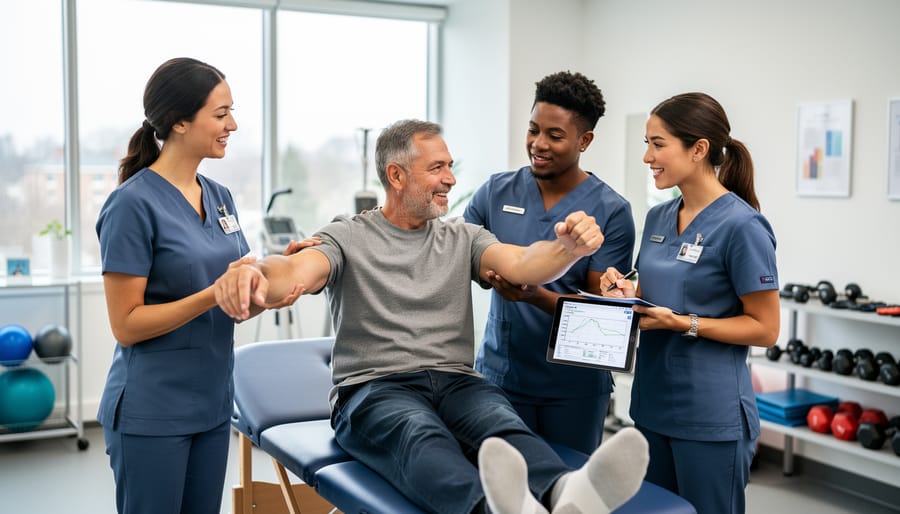
The assessment phase is where therapists become detectives, piecing together a complete picture of who you are beyond your diagnosis. Your interdisciplinary team will sit down with you and your family to explore your medical history, current physical and cognitive abilities, daily routines, living situation, and what matters most to you in your recovery journey. They’ll ask questions that might surprise you: What does a typical day look like? Who’s in your support network? What activities bring you joy or frustration? Do you have stairs at home, pets to care for, or a job you hope to return to?
This isn’t a checklist exercise. The team uses standardized tests and routine measurement and feedback to capture baseline function, but they’re equally interested in the context around those numbers. A stroke survivor who lives alone and needs to prepare meals faces different challenges than someone with round-the-clock care. Understanding your environment, responsibilities, and aspirations allows therapists to design interventions that fit your real life, not an idealized rehab setting. This foundation ensures that every decision moving forward is rooted in your specific circumstances and goals.
Building Your Recovery Plan
Once your assessment is complete, your interdisciplinary team sits down with you and your family to turn that information into an actionable recovery plan. This isn’t a process where clinicians hand you a predetermined protocol. Instead, therapists from different disciplines, physical, occupational, speech, psychology, work together to identify which interventions will genuinely serve your priorities.
Your personal goals become the North Star. If returning to work matters most, your plan emphasizes skills and stamina for your job tasks. If independent living is the focus, daily activities like cooking, bathing, and mobility take center stage. The team considers your home environment, available support, cultural preferences, and any barriers you face, transportation, financial constraints, language needs.
This collaborative design ensures that every therapy session connects to something meaningful in your life. You understand why each exercise or strategy matters, which builds commitment. Family members learn how to support your progress between sessions. The result is a cohesive roadmap that reflects who you are, where you want to go, and the practical realities you navigate every day.
Monitoring and Adapting
Recovery doesn’t follow a straight line. That’s why your team tracks progress at every session, looking at what’s working and what needs adjustment. They measure concrete outcomes, range of motion gains, cognitive milestones, pain levels, daily task completion, alongside your subjective experience of how things feel.
When a technique produces clear gains, therapists build on it. When progress stalls or unexpected challenges emerge, they pivot quickly rather than pushing a strategy that isn’t serving you. Regular check-ins with you and your family ensure the plan stays aligned with your evolving needs and priorities.
This continuous refinement means you’re never locked into an ineffective approach. Your recovery plan grows and shifts with you, maintaining momentum toward what matters most in your life.
Core Components of Personalized Recovery

Personalized recovery rests on several interconnected elements that work together to create a truly individualized rehabilitation experience. These components distinguish tailored care from generic protocols and explain why personalized approaches consistently deliver stronger outcomes across diverse populations and conditions.
At the heart of every personalized recovery plan is goal-oriented planning. Your therapists don’t simply aim to improve strength or mobility in the abstract, they ask what matters most to you. Perhaps you want to return to work, care for your children independently, or regain the confidence to participate in community activities. Your recovery team translates these personal priorities into measurable objectives that guide every intervention and mark genuine progress toward the life you envision.
The essential components that make personalized recovery effective include:
- Goal-oriented planning that anchors treatment to your personal priorities and desired outcomes
- Evidence-based but flexible interventions adapted to your learning style, physical abilities, and daily routines
- Interdisciplinary collaboration among therapists, physicians, psychologists, and specialists who share insights about your progress
- Patient and family education that empowers you to understand your condition and actively participate in recovery decisions
- Integration of assistive technology and adaptive equipment tailored to your specific needs and environment
- Culturally responsive care that respects your values, language preferences, and community context
Flexibility in treatment modalities ensures your plan evolves as you do. If a particular exercise causes pain or a therapy session time conflicts with caregiving responsibilities, your team adjusts rather than abandoning the goal. This adaptability extends to the methods themselves: combining traditional physical therapy with aquatic therapy, speech exercises with music therapy, or cognitive training with real-world problem-solving tasks based on what resonates with you.
Family and caregiver involvement transforms recovery from something done to you into a collaborative journey. Your loved ones learn techniques to support your progress at home, provide valuable feedback about your daily functioning, and help maintain motivation during difficult stretches. This partnership strengthens both your immediate results and long-term sustainability.
Cultural sensitivity recognizes that recovery doesn’t happen in a vacuum. Your background, beliefs, communication style, and community ties shape how you experience illness and healing. A personalized approach honors these dimensions, building trust and ensuring interventions align with your worldview rather than working against it.
How Personalized Recovery Is Used Across Conditions
Physical and Developmental Disabilities
Personalized recovery proves especially powerful for individuals navigating physical and developmental disabilities. After a stroke, therapists design programs that focus on the specific functions you’ve lost, whether that’s regaining arm movement for daily grooming or rebuilding speech patterns for conversation, rather than following a generic post-stroke protocol. For someone with cerebral palsy, a personalized plan might emphasize adaptive equipment that supports participation in school or work, combined with physical therapy exercises tailored to your mobility goals and muscle tone patterns.
Traumatic brain injury recovery often demands the most individualized approach because no two brain injuries affect people the same way. Your plan might address memory challenges through cognitive exercises, balance issues through vestibular therapy, and emotional regulation through counseling, all coordinated to help you return to meaningful activities. The interdisciplinary team adjusts interventions as your brain heals and new abilities emerge, celebrating each milestone while tackling obstacles that matter most to your independence and quality of life.
Mental Health and Dual Diagnoses
When mental health conditions intersect with physical rehabilitation needs, personalized recovery becomes essential rather than optional. A person recovering from a stroke while managing depression faces entirely different barriers than someone with stroke alone, motivation wanes, therapy attendance drops, and progress stalls without addressing both dimensions.
Personalized plans for mental health weave psychological support directly into physical or developmental interventions. A therapist might adjust session timing to match medication schedules, incorporate anxiety management techniques before challenging exercises, or coordinate with psychiatrists to ensure treatments reinforce rather than contradict each other.
For dual diagnoses, integration prevents the fragmented care that leaves patients shuttling between specialists who never compare notes. The interdisciplinary team designs unified strategies: occupational therapy for daily living skills pairs with counseling for trauma responses; speech therapy adapts to attention deficits linked to ADHD. This cohesive approach recognizes that healing the whole person requires treating mind and body as inseparable partners in recovery.
Pediatric and Lifespan Considerations
Recovery needs shift dramatically as individuals move through life stages. A toddler learning to walk after a developmental delay requires playful, family-centered interventions that fit into daily routines, building skills through games, mealtimes, and exploration. Adolescents facing injury or chronic conditions need plans that honor their growing independence, peer relationships, and academic demands, balancing clinical goals with social identity and emotional well-being.
For working adults, recovery strategies must integrate with employment responsibilities, caregiving roles, and financial realities. Treatment schedules, home exercises, and assistive technologies are designed around real-life constraints. Older adults often pursue goals centered on maintaining autonomy, preventing falls, managing multiple health conditions, and preserving quality of life rather than full restoration of function.
Effective personalized recovery recognizes these differences, adjusting communication styles, goal-setting approaches, and therapeutic methods to match cognitive development, physical capacity, and life priorities at each stage.
Benefits of a Personalized Recovery Approach

When recovery plans match your actual needs and priorities, the results speak for themselves. Patients in personalized programs consistently report feeling more invested in their progress because the goals matter to them personally, not just to a therapist following a protocol. This intrinsic motivation drives better attendance, higher effort during sessions, and a willingness to practice skills outside therapy time.
Progress happens faster when interventions target what you genuinely need to improve. Instead of spending weeks on generic exercises that don’t translate to your daily life, you focus on activities that directly support your return to work, parenting responsibilities, or independence at home. A stroke survivor relearning to prepare meals, for instance, makes observable gains in real-world function far quicker than someone repeating abstract movement drills.
Reduced frustration is another measurable benefit. When your treatment team understands your cognitive style, emotional triggers, and physical limitations, they can adjust the difficulty and pacing to keep you challenged without overwhelming you. This balance prevents burnout and keeps you engaged through setbacks that would derail a rigid program.
The therapeutic alliance, the trust between you and your care team, strengthens when therapists listen, adapt, and involve you in decisions. Patients who feel heard and respected are more likely to communicate openly about pain, confusion, or doubt, allowing the team to course-correct early. One young adult with cerebral palsy described his personalized plan as “finally working with me, not on me,” a sentiment that reflects the collaborative spirit driving better outcomes.
Long-term results prove more sustainable because skills are learned in context. You’re not just regaining strength or stability in a clinic; you’re practicing those abilities in the environments where you’ll actually use them. This transfer makes gains stick. Families often notice continued improvement months after formal therapy ends, as patients apply problem-solving strategies and adaptive techniques that were tailored to their routines from the start.
Frequently Asked Questions About Personalized Recovery
Personalized recovery raises practical questions for patients and families evaluating their rehabilitation options. Understanding the logistics, costs, and flexibility of this approach helps you make informed decisions about your care.
How is personalized recovery different from standard rehabilitation?
Standard rehabilitation typically follows predetermined protocols based on diagnosis alone, while personalized recovery adapts every aspect of treatment to your unique abilities, goals, lifestyle, and support system. The approach treats you as an individual, not just a condition.
Will my insurance cover personalized recovery services?
Most insurance plans, including Medicare and Medicaid, cover medically necessary rehabilitation services regardless of whether the approach is personalized. Coverage depends on the specific treatments prescribed rather than the philosophy behind them, so check with your provider about your individual plan details.
How long does personalized recovery take?
Duration varies widely based on your condition, goals, and progress rate. Some people achieve their primary objectives within weeks, while others benefit from months or ongoing support. Your team regularly reviews milestones and adjusts the timeline as your needs evolve.
Can my family participate in my recovery plan?
Family involvement is encouraged and often essential to success. Your loved ones can attend therapy sessions, learn techniques to support your progress at home, contribute to goal-setting, and provide valuable insights about your daily life and challenges.
If your needs change during recovery, your team can pivot quickly. Regular assessments catch emerging challenges or new opportunities, allowing therapists to modify exercises, introduce different interventions, or shift focus areas. This built-in flexibility means you’re never locked into a plan that stops working for you.
Personalized recovery represents more than a treatment philosophy, it’s a commitment to seeing each person as a whole individual with unique strengths, challenges, and aspirations. When rehabilitation honors your specific circumstances, goals, and lived experience, it creates the conditions for genuine, sustainable progress.
The evidence is clear: people who receive tailored care engage more deeply in their recovery, achieve better functional outcomes, and maintain those gains over time. By addressing what matters most to you, whether that’s returning to work, playing with your children, managing daily routines independently, or rebuilding confidence, personalized approaches transform rehabilitation from something that happens to you into a collaborative journey you actively shape.
If you or a loved one are beginning rehabilitation or feel stuck in a one-size-fits-all program, consider seeking out teams that prioritize individualized care. Ask questions about how they’ll assess your unique needs, who will be involved in your plan, and how they’ll adapt as you progress. The right interdisciplinary team won’t just treat symptoms, they’ll partner with you to build a recovery pathway that reflects your life, your values, and your vision for the future.
Your recovery journey is yours alone. Personalized care ensures it’s designed that way from the start, giving you the best possible foundation for lasting, meaningful change.