


Recognizing PTSD symptoms isn’t always straightforward. The intrusive memories, nightmares, and flashbacks that many people associate with post-traumatic stress disorder represent just one dimension of a complex condition that affects approximately 6% of adults in the United States at some point in their lives. If you’re reading this because something feels wrong after a traumatic experience, or because someone you care about seems different in ways you can’t quite name, understanding the full spectrum of symptoms is your first step toward healing.
PTSD manifests through four distinct symptom categories, and you don’t need to experience them all to benefit from professional support. Some people relive their trauma through vivid, unwanted memories. Others go to great lengths to avoid reminders of what happened, sometimes withdrawing so completely that loved ones feel shut out. Many experience persistent negative changes in thoughts and mood, struggling with feelings they never had before the trauma. Still others live in a constant state of heightened alertness, startling easily and feeling unable to relax.
These symptoms are your nervous system’s attempt to protect you from perceived danger. They’re not signs of weakness or failure. They’re treatable responses to overwhelming experiences, and with the right combination of evidence-based therapies and personalized care, most people find significant relief. Whether you’ve been struggling for weeks or years, whether your trauma stems from combat, assault, accidents, or other life-threatening events, professional intervention can help you reclaim your life. Understanding what you’re experiencing is the foundation for that recovery.

What Is PTSD and Why Symptoms Matter
Post-traumatic stress disorder (PTSD) is a mental health condition that can develop after experiencing or witnessing a traumatic event. While it’s normal to feel anxious, frightened, or upset following trauma, PTSD occurs when these reactions don’t fade with time and instead intensify or persist, disrupting daily life. The condition isn’t about personal weakness or character flaws. Your brain’s natural alarm system, designed to protect you from danger, gets stuck in overdrive after trauma.
When you experience something traumatic, whether it’s a serious accident, assault, combat, natural disaster, or another life-threatening event, your brain processes and stores these memories differently than ordinary experiences. For some people, this protective response doesn’t shut off once the danger passes. The symptoms that emerge, ranging from intrusive memories to physical tension, represent your mind and body’s ongoing attempt to process what happened and keep you safe from future harm.
Recognizing symptoms early matters because PTSD is highly treatable. Updated clinical practice guidelines from 2025 highlight numerous evidence-based interventions that help people recover and reclaim their lives. Research consistently shows that early intervention leads to better outcomes. When symptoms are addressed promptly through proper assessment and personalized treatment, people experience significant improvement in both mental and physical wellbeing. The longer symptoms go unrecognized or untreated, the more they can affect relationships, work, and overall quality of life. Understanding what you’re experiencing is the essential first step toward healing, and effective support is available through interdisciplinary rehabilitation approaches that address the full spectrum of how PTSD affects you.
The Four Core Categories of PTSD Symptoms
Re-experiencing: When the Past Feels Present
Re-experiencing symptoms thrust you back into the traumatic event, making it feel as though you’re living through it again. Unlike ordinary memories that you recall when you choose to, these intrusive experiences hijack your present moment without warning. Your brain’s alarm system, overactivated by trauma, misidentifies safe situations as dangerous and floods you with the same fear, helplessness, or horror you felt during the original event.
Flashbacks are the most disorienting form of re-experiencing. During a flashback, you’re not simply remembering what happened, you genuinely feel like it’s happening right now. A combat veteran might hit the ground when a car backfires. A survivor of a serious accident might feel their body jolt as if the impact just occurred. These episodes can last seconds or stretch into minutes, and during them, your rational mind knows you’re safe while your traumatic memory insists otherwise.
Nightmares related to the trauma disrupt sleep and leave you dreading bedtime. You might wake up with your heart racing, drenched in sweat, unable to shake the visceral fear. Some people experience the same nightmare repeatedly, while others have variations on the traumatic theme. The exhaustion that follows compounds other PTSD symptoms, creating a cycle where poor sleep intensifies daytime distress.
Common re-experiencing symptoms include:
- Flashbacks where you feel like the trauma is happening again
- Recurring nightmares about the traumatic event or similar threats
- Intrusive thoughts or images that appear without invitation
- Physical reactions like sweating, rapid heartbeat, or trembling when reminded of the trauma
- Intense emotional distress when encountering trauma-related cues
Triggers are environmental cues that activate these symptoms. A specific smell, sound, time of year, or even a facial expression can launch you back into the traumatic memory. One person described how the scent of a particular cologne instantly transported them to the moment of their assault, complete with the same physical sensations. Another found that crowded spaces triggered overwhelming panic because their trauma occurred in a similar setting.
Understanding that these symptoms stem from your nervous system’s protective response, not personal weakness, is crucial. Your brain developed these patterns trying to keep you safe by staying hypervigilant to potential threats. Recognizing re-experiencing symptoms in yourself or someone you care about is the foundation for seeking the specialized support that can help rewire these trauma responses.
Avoidance: The Protective Shield That Limits Life
Avoidance starts as self-protection. After trauma, your mind naturally wants to keep you safe from anything that might trigger painful memories or overwhelming emotions. You might stop driving on certain roads, avoid crowded spaces, decline social invitations, or steer conversations away from specific topics. At first, this feels like relief.
But avoidance rarely stays contained. What begins as steering clear of one street or situation gradually expands. You might start avoiding entire neighborhoods, then stop leaving home except when necessary. Friends who knew you during the trauma might get cut out completely, not because you don’t care about them, but because they remind you of who you were before everything changed. Some people avoid watching the news, reading certain books, or even experiencing emotions that connect to the traumatic event.
This protective shield works in the short term by reducing immediate distress. The problem is that avoidance prevents your brain from learning that these reminders, while uncomfortable, are not actually dangerous. Each time you avoid something, you reinforce the message that you cannot handle it. Your world shrinks incrementally until activities you once enjoyed, places you used to go, and relationships that mattered become off-limits.
Family members often notice this gradual withdrawal before the person experiencing it does. You might rationalize that you are simply busy, tired, or not in the mood, but the pattern reveals something deeper. The tragedy of avoidance is that it maintains PTSD by preventing the processing and integration necessary for healing. Treatment approaches address this by gradually, safely helping you reclaim the life avoidance has taken away.

Negative Changes in Thinking and Mood
PTSD reshapes how people think about themselves, others, and the world around them. These cognitive and emotional shifts often develop gradually, making them harder to recognize than flashbacks or nightmares, yet they profoundly affect daily functioning and relationships.
Many people with PTSD develop persistent negative beliefs that feel absolutely true despite evidence to the contrary. Thoughts like “I can’t trust anyone,” “The world is completely dangerous,” or “I’m permanently damaged” become the lens through which everything is interpreted. These beliefs aren’t chosen, they’re symptoms of how trauma rewires thinking patterns.
Distorted blame frequently accompanies these beliefs. Some individuals blame themselves entirely for what happened, even when they had no control over the traumatic event. Others swing to blaming everyone around them, straining relationships and isolating themselves further. This all-or-nothing thinking about responsibility keeps people stuck in shame or anger.
Loss of interest in activities that once brought joy is another hallmark symptom. Hobbies get abandoned, social invitations declined, relationships neglected. It’s not laziness or depression alone, it’s a genuine inability to anticipate or experience pleasure from activities that used to matter.
Emotional numbness often follows. People describe feeling detached from their own emotions, unable to feel love for family members, or experiencing a persistent emptiness. Positive emotions become particularly difficult to access. You might feel anger or fear intensely but find happiness, contentment, or affection completely out of reach.
Feelings of detachment extend beyond emotions. Many describe feeling disconnected from their own bodies, watching themselves from outside, or sensing a barrier between themselves and others. This detachment serves as protection against overwhelming feelings but leaves people feeling isolated and alone even in crowded rooms.
These thinking and mood changes don’t reflect weakness or character flaws. They’re treatable symptoms that respond to evidence-based interventions designed to help people rebuild healthier thought patterns and reconnect with themselves and others.
Heightened Arousal and Reactivity: Living on High Alert
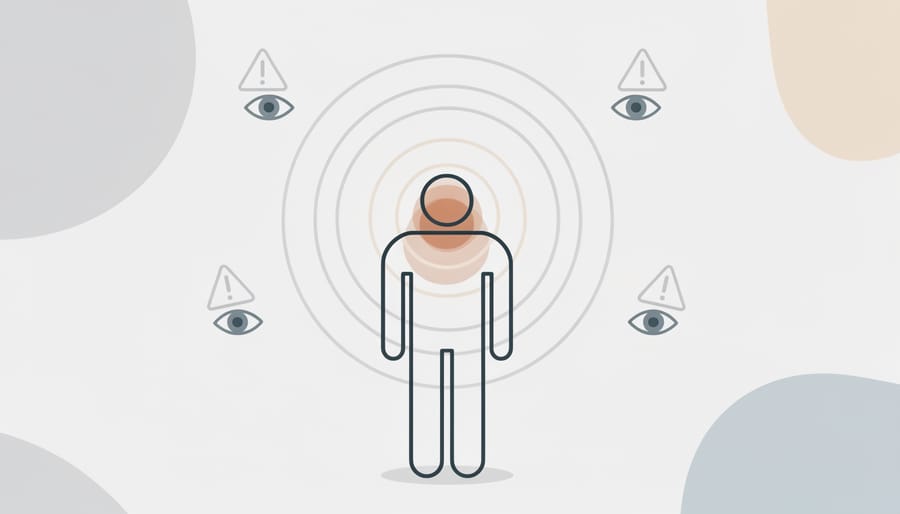
Your body constantly scans for danger, muscles tense and ready, even when no threat exists. This persistent state of high alert defines the arousal and reactivity symptoms of PTSD, where your nervous system remains locked in survival mode long after the traumatic event has passed.
Hypervigilance makes you constantly monitor your surroundings, checking exits, watching people’s movements, or scanning rooms for potential threats. You might find yourself unable to relax in public spaces, always positioned where you can see the door. This exhausting vigilance depletes your energy and makes everyday activities feel draining.
The exaggerated startle response means sudden sounds or movements trigger intense reactions. A car backfiring, someone approaching from behind, or even a phone ringing can send your heart racing and flood your system with adrenaline. These reactions happen automatically, before your conscious mind can register there’s no actual danger.
Irritability and anger outbursts often confuse people experiencing PTSD. Small frustrations that you once handled easily now trigger disproportionate anger. You might snap at loved ones, feel rage while driving, or struggle to manage minor inconveniences. This happens because your nervous system interprets even mild stressors as threats.
Sleep disturbances compound these challenges. Falling asleep feels impossible when your brain refuses to shut down its threat-detection systems. You might lie awake hyperalert to every sound, or wake frequently throughout the night. Poor sleep then worsens irritability, concentration difficulties, and emotional regulation the next day.
Difficulty concentrating stems from your brain prioritizing threat surveillance over other cognitive tasks. Reading, following conversations, or completing work projects becomes challenging when part of your attention constantly scans for danger.
These symptoms reflect your nervous system stuck in threat-detection mode, a physiological response originally designed to keep you safe. Understanding this mechanism is crucial because it means these reactions aren’t character flaws but treatable symptoms that respond to evidence-based interventions.
PTSD Symptoms Across Different Populations
PTSD doesn’t follow a one-size-fits-all pattern. The symptoms we’ve explored manifest differently depending on age, gender, cultural background, and the nature of the trauma itself.
Children who experience trauma often express PTSD through regression rather than the classic symptom categories. A seven-year-old might suddenly start bedwetting after being toilet-trained for years, or refuse to sleep alone after previously having no issues with sleep and routines. Young children may reenact traumatic events through play, acting out scenarios repeatedly without understanding why. They might become clingy with caregivers, show increased irritability, or struggle with concentration at school in ways that look different from adult hypervigilance.
Adolescents occupy a middle ground, sometimes displaying adult-like symptoms while other times showing more impulsive or self-destructive behaviors. Teenage PTSD often gets misread as typical adolescent rebellion. The irritability and risk-taking that characterize heightened arousal symptoms may appear as sudden behavioral changes, while avoidance might look like social withdrawal that parents attribute to normal teen moodiness.
Gender differences in symptom expression are well-documented. Women are more likely to experience PTSD following trauma exposure and tend to report more intense re-experiencing symptoms and emotional numbing. Men more frequently exhibit anger, aggression, and substance use as part of their symptom profile. These differences reflect both biological factors and societal expectations around emotional expression.
Older adults face unique challenges in symptom recognition. Long-suppressed trauma from decades past can resurface during retirement or after losing a spouse. Physical symptoms like chronic pain may overshadow or mask psychological distress, and healthcare providers sometimes dismiss PTSD symptoms as normal aging or dementia.
Cultural background shapes how people interpret and express distress. Some cultures emphasize physical symptoms over emotional ones, while others may have different frameworks for understanding trauma. Effective assessment requires cultural humility and recognition that Western diagnostic categories don’t capture every valid expression of post-traumatic stress.
When Symptoms Become a Diagnosis: Current Assessment Standards
Experiencing symptoms after trauma is a normal human response. However, not everyone who goes through something traumatic will develop PTSD. Healthcare professionals rely on specific criteria to distinguish between expected stress reactions and a clinical diagnosis.
The DSM-5 PTSD duration requirement establishes that symptoms must persist for more than one month to meet diagnostic criteria. This timing matters because many people experience intense trauma-related symptoms in the immediate aftermath of a traumatic event, but these often resolve naturally within the first few weeks. A diagnosis of PTSD is made when symptoms persist beyond this initial period and cause significant distress or impair your ability to function in daily life, whether at work, in relationships, or in self-care.
The recent clinical practice guideline updates, which include 34 evidence-based recommendations across five key areas, emphasize thorough assessment and diagnosis as the foundation for effective treatment. These guidelines recognize that PTSD affects each person differently and requires individualized evaluation by trained healthcare professionals.
Current data reveals a concerning gap between diagnosis and need. According to Canada PTSD diagnosed and probable rates while 5% of Canadians report receiving a formal PTSD diagnosis from a healthcare professional, 8% meet the criteria for probable PTSD based on symptoms experienced in the past month. This three-percentage-point difference suggests many people are living with untreated PTSD, possibly because they haven’t sought help or accessed proper assessment.
Assessment typically involves a comprehensive evaluation of your trauma history, the specific symptoms you’re experiencing across all four core categories, how long these symptoms have persisted, and how they’re affecting your daily functioning. The goal isn’t just to assign a label but to understand your unique experience and determine the most effective path forward for your recovery.

The Physical Side of PTSD: Beyond Mental Health Symptoms
PTSD doesn’t just live in your mind. Your body carries the weight of trauma too, often manifesting in ways that seem unrelated to your mental health at first glance. Many people with PTSD experience chronic pain, particularly in the neck, shoulders, and back, where tension accumulates from constant hypervigilance. Gastrointestinal problems like irritable bowel syndrome, nausea, and digestive distress are common, reflecting how stress hormones disrupt normal bodily functions.
The cardiovascular system also bears the burden. Research shows elevated rates of heart disease, high blood pressure, and irregular heart rhythms among people with PTSD. Your immune system weakens under prolonged stress, making you more susceptible to infections and slower to heal from injuries. Some people notice unexplained headaches, dizziness, or fatigue that conventional medical tests can’t fully explain.
This mind-body connection isn’t metaphorical. When your nervous system remains stuck in threat-detection mode, it triggers a cascade of physiological responses that affect every system in your body. The same stress hormones that prepare you for immediate danger become toxic when they never shut off.
Understanding these physical symptoms as legitimate expressions of PTSD rather than separate medical problems is crucial. That’s why an interdisciplinary approach to treatment proves most effective. Rehabilitation teams that include physiotherapists, occupational therapists, and mental health professionals can address both the psychological and physical dimensions of PTSD simultaneously, creating comprehensive care plans that support true healing rather than just managing isolated symptoms.
What Current Research Tells Us About PTSD Treatment
Recent advances in PTSD research have reshaped how rehabilitation professionals approach treatment, offering renewed hope for individuals experiencing symptoms. The 2025 clinical practice guideline for PTSD treatment represents a comprehensive update based on systematic review of scientific evidence, providing clearer direction for creating effective care plans.
The updated guideline addresses thirty-four specific recommendations across five assessment-to-treatment topic areas: assessment and diagnosis, prevention, treatment interventions, specialized nightmare treatment, and complementary approaches. This structure acknowledges that PTSD affects individuals differently and requires flexible, multifaceted support rather than one-size-fits-all solutions.
Trauma-focused therapies remain at the core of evidence-based treatment. These approaches help individuals process traumatic memories in safe, controlled environments with trained professionals. The research consistently shows that addressing trauma directly, rather than simply managing symptoms, produces the most lasting improvements.
What sets current treatment approaches apart is the recognition that PTSD impacts the whole person. Physical symptoms, sleep disturbances, and daily functioning challenges all require attention alongside psychological support. This is where interdisciplinary rehabilitation proves particularly valuable. When physiotherapists, occupational therapists, and mental health professionals collaborate on a coordinated care plan, they can address the full spectrum of how PTSD manifests in your life.
The guideline also highlights prevention strategies and specialized interventions for specific symptoms like nightmares, which can be especially debilitating. Complementary approaches are now better understood for their role in supporting primary treatments.
Personalized care plans have become the standard rather than the exception. Your rehabilitation team considers your specific symptoms, trauma history, physical health, daily responsibilities, and personal goals when designing your treatment approach. This individualized attention reflects what research tells us works best: treatment that adapts to you, not the other way around.
Taking the First Step: What to Do If You Recognize These Symptoms
Recognizing PTSD symptoms in yourself or someone you care about can feel overwhelming, but taking action is a sign of strength. The gap between experiencing symptoms and seeking help is significant: while 8% of Canadians meet criteria for probable PTSD based on recent symptoms, only 5% report having received a formal diagnosis. This tells us many people are suffering without the support they need and deserve.
Starting the conversation with a healthcare professional doesn’t require you to have everything figured out. Here’s a practical path forward:
- Document your symptoms. Keep brief notes about when intrusive memories occur, what triggers avoidance behaviors, how sleep has changed, and how symptoms affect your daily life. This information helps professionals understand your experience more fully.
- Reach out to a healthcare professional. Your family doctor, a mental health specialist, or a rehabilitation center can all be appropriate starting points. Be honest about what you’re experiencing, even if it feels vulnerable.
- Consider interdisciplinary support. PTSD affects both mind and body, so a comprehensive approach often works best. Rehabilitation services that include physiotherapy for physical tension and pain, occupational therapy for daily functioning, and mental health support address the full scope of symptoms.
- Explore evidence-based treatments. The 2025 updated clinical practice guidelines outline 34 recommendations across assessment, treatment, and complementary approaches. Ask potential providers about their approach to trauma-focused therapy and how they stay current with best practices.
- Build a support network. Recovery happens in community. Whether that’s trusted friends, family members, support groups, or a dedicated healthcare team you don’t have to navigate this alone.
At Mackay Therapy and Rehabilitation, personalized care plans address both the mental and physical dimensions of PTSD. This interdisciplinary approach recognizes that healing happens when we treat the whole person, not just isolated symptoms. The assessment process typically involves understanding your unique trauma history, current symptoms, how PTSD impacts your work and relationships, and what goals matter most to you for recovery.
You deserve support that meets you where you are and walks alongside you toward where you want to be.
Recognizing PTSD symptoms in yourself or someone you care about takes courage. These symptoms aren’t signs of weakness, they’re your mind and body signaling that you’ve experienced something overwhelming and that healing is needed. The good news is that PTSD is highly treatable when approached with the right support.
You don’t have to navigate this alone. Understanding when to seek help is crucial, whether you’re managing symptoms yourself or supporting a loved one through recovery. Rehabilitation professionals can develop personalized care plans that address both the mental and physical dimensions of PTSD, combining approaches like physiotherapy, occupational therapy, and trauma-informed care tailored to your unique needs.
Concerns about affordability shouldn’t prevent you from accessing support. Learning about disability therapy costs can help you plan for treatment and explore available options.
Recovery is possible. With evidence-based interventions and compassionate professionals guiding your journey, you can reclaim the quality of life that PTSD has taken from you. That first step toward help is also a step toward hope.