
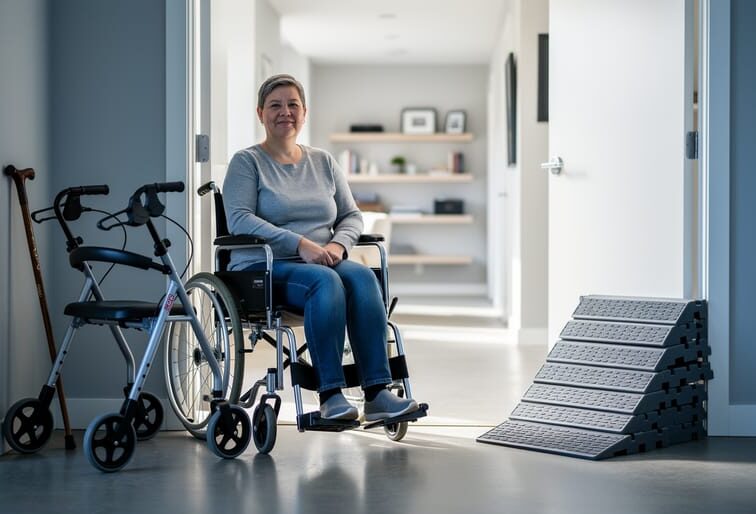

Finding the right mobility equipment can make the difference between dependence and freedom. Calgary residents recovering from injury or surgery, managing chronic conditions, or supporting aging family members have access to a comprehensive range of mobility aids through local healthcare providers, rental programs, and specialized suppliers.
The mobility aid landscape includes everything from simple canes and walkers to sophisticated power wheelchairs, stair lifts, and modular ramps. Each device serves a distinct purpose in your rehabilitation journey, and selecting the right option depends on your specific physical needs, living environment, and recovery goals. Understanding what’s available locally and how to access it through Alberta Health Services, the Red Cross Long Term Loans program, or providers like Mobility Plus can streamline your path to greater independence.
This guide breaks down eight essential categories of mobility equipment, from manual wheelchairs and rollators to bathing aids and vertical platform lifts. You’ll learn what each device offers, who benefits most from it, and where to obtain it in Calgary through purchase, rental, or loan programs. We’ve designed this resource to support both individuals navigating their own rehabilitation and healthcare professionals researching options for clients.
The right assistive technology doesn’t just compensate for physical limitations. It restores your ability to participate in daily activities, maintain social connections, and pursue meaningful goals. Whether you need short-term support during post-surgical recovery or a long-term solution for chronic mobility challenges, Calgary’s network of rehabilitation services and equipment providers offers personalized solutions tailored to your unique circumstances. Our interdisciplinary team at Mackay Therapy regularly collaborates with these local resources to ensure you receive equipment that integrates seamlessly with your broader care plan.
How We Chose These Mobility Aids
We selected these mobility aids based on four core criteria that reflect our rehabilitation approach at Mackay Therapy. First, each aid addresses specific mobility challenges we regularly see in our Calgary patients, from temporary post-surgical support to long-term assistance with chronic conditions. Second, we focused on equipment readily available through local Calgary providers, whether through rental programs like those at Mobility Plus, loan options through Alberta Health Services and the Red Cross, or direct purchase channels. This ensures you can actually access the aids we discuss without unnecessary delays.
Third, we chose aids with proven effectiveness in rehabilitation settings. Our interdisciplinary team, physiotherapists, occupational therapists, and other specialists, sees measurable improvements when patients use properly selected equipment as part of their recovery plan. Finally, every aid on this list aligns with personalized recovery principles. What works for one person’s hip replacement recovery might not suit someone managing Parkinson’s disease, so our team assesses which aids best support each individual’s specific recovery goals, home environment, and functional needs.
This selection process ensures the aids we recommend aren’t just theoretically helpful, they’re practical tools that Calgary residents can obtain and integrate into their daily lives with appropriate professional guidance.
1. Manual Wheelchairs: Versatile Support for Limited Mobility
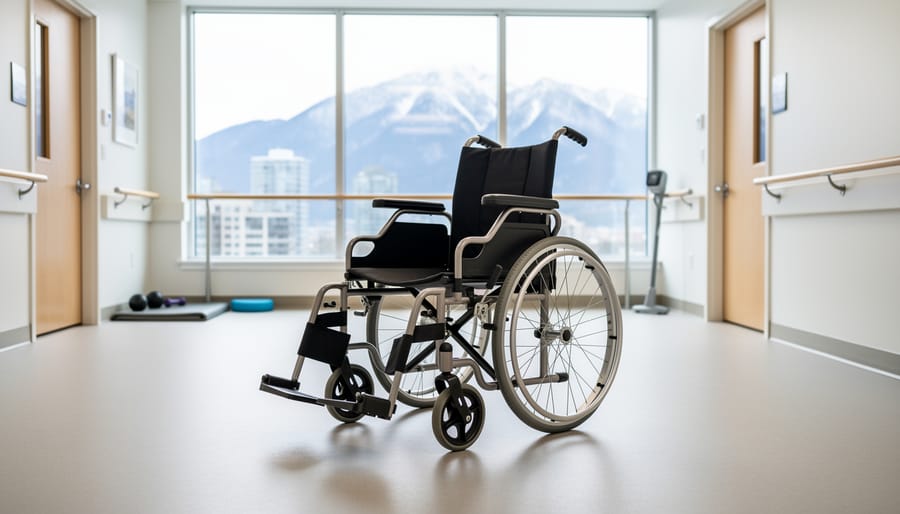
Manual wheelchairs remain one of the most versatile mobility solutions for individuals experiencing temporary or permanent limitations in walking. They provide essential support for people recovering from surgery, managing chronic conditions like multiple sclerosis or arthritis, or dealing with injuries that affect lower limb function.
These wheelchairs work best for individuals who maintain adequate upper body strength and trunk stability to propel themselves or who have caregivers available to assist with pushing. The decision to use a manual wheelchair typically comes after a thorough assessment of your physical capabilities, daily activities, and recovery goals.
Frame options vary significantly based on your needs. Standard wheelchairs feature fixed frames and are ideal for temporary use during recovery. Lightweight models reduce the effort required for self-propulsion and make transfers easier. Transport wheelchairs, designed primarily for caregiver pushing rather than self-propulsion, suit individuals with limited upper body strength who need occasional mobility support.
Occupational therapists play a critical role in wheelchair selection and fitting. They assess your shoulder mobility, arm strength, and transfer abilities to determine which frame style and seat dimensions will work best. Proper fitting prevents pressure sores, shoulder strain, and other complications that arise from poorly sized equipment. They also provide transfer training, teaching you safe techniques for moving between the wheelchair and beds, toilets, or vehicles.
In Calgary, you can access manual wheelchairs through the Alberta Health Services Equipment Loan Program by contacting the Continuing Care Access Line at 1-855-371-4122. Mobility Plus offers both rental and purchase options, while the Red Cross Long Term Loans program provides wheelchairs to individuals with chronic but stable conditions. Each program serves different needs based on your recovery timeline and condition permanence.
2. Power Wheelchairs: Independent Mobility for Complex Needs
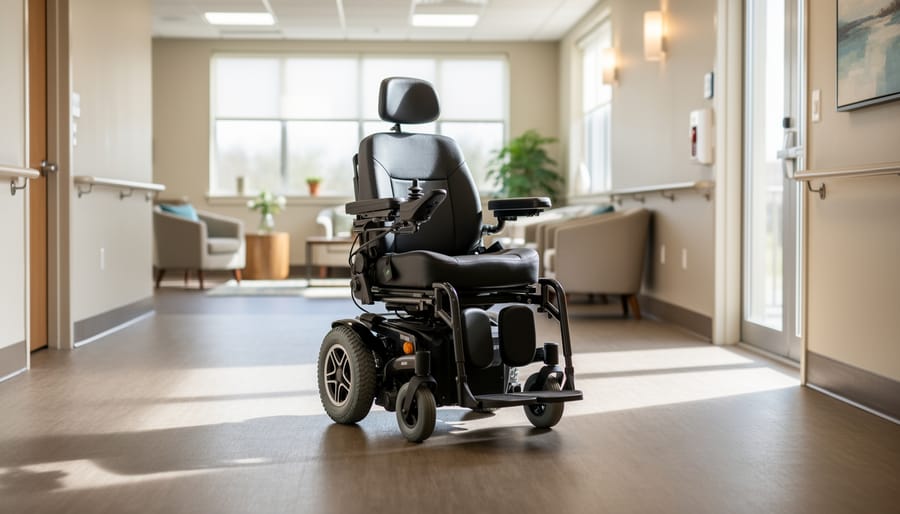
Power wheelchairs provide a lifeline for individuals whose limited upper body strength, endurance, or coordination makes self-propelling a manual wheelchair impractical or impossible. Unlike manual wheelchairs that require you to push the rims with your hands, power wheelchairs use battery-powered motors controlled through a joystick or alternative input device, allowing independent mobility even with significant physical limitations.
These devices become the better choice when you can’t safely propel yourself for the distances needed in daily life, when upper extremity weakness would lead to shoulder injuries from repeated pushing, or when conditions like ALS, advanced multiple sclerosis, or high-level spinal cord injuries limit arm function. Power wheelchairs also benefit individuals with severe cardiac or respiratory conditions where the exertion of manual propulsion poses health risks.
The assessment process for a power wheelchair is comprehensive and involves more than just measuring your size. An occupational therapist evaluates your cognitive abilities, vision, reaction time, and environmental needs to determine if you can operate the chair safely. They assess your seating and positioning requirements, considering pressure relief needs and postural support that may require specialized cushions or backrests.
Training focuses on maneuvering in tight spaces, navigating thresholds and curbs, and managing the chair’s speed settings. The joystick programming can be personalized to match your hand control, adjusting sensitivity and response time to accommodate tremors, limited range of motion, or reduced fine motor skills. For those who can’t use a standard joystick, alternative controls like chin switches or sip-and-puff systems can be configured.
In Calgary, Mobility Plus offers power wheelchairs alongside their other mobility equipment. The individualized nature of power wheelchair prescription means working closely with rehabilitation professionals ensures you receive a system configured specifically for your physical capabilities and lifestyle requirements.
3. Walkers and Rollators: Steady Support for Ambulation
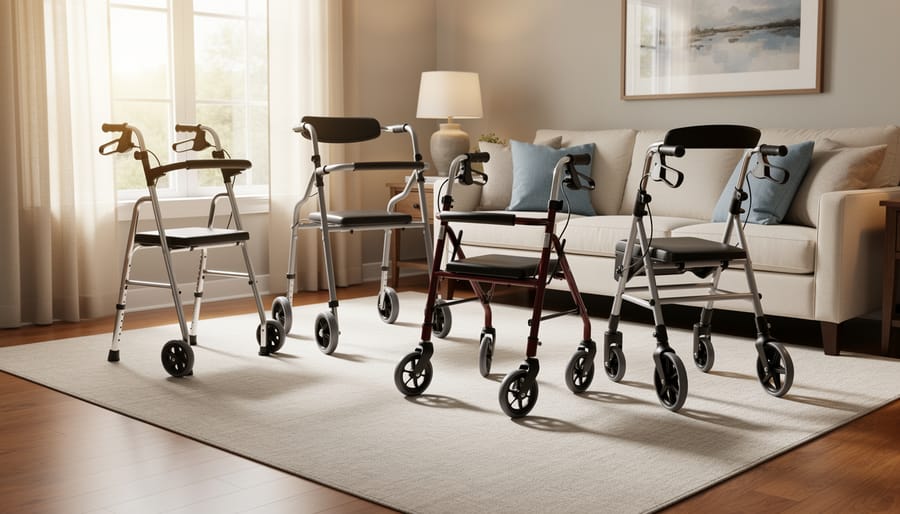
Walkers and rollators rank among the most prescribed mobility aids in rehabilitation settings because they provide adjustable support that matches each person’s specific balance and strength capabilities. The right choice depends on how much stability you need, whether you tire easily, and your ability to lift or push the device during walking.
Standard walkers without wheels offer maximum stability. You lift the entire frame with each step, placing it ahead of you before moving forward. This lift-and-step pattern works well when balance is significantly compromised or weight-bearing restrictions apply to one leg. The trade-off is energy expenditure, lifting the walker repeatedly demands good upper body strength and can fatigue some users quickly.
Two-wheel walkers bridge the gap between stability and ease of movement. The front legs have wheels while the rear legs have rubber tips that grip the floor. You push the walker forward in a more natural walking rhythm without fully lifting it, which conserves energy while still providing substantial support. These suit individuals who need considerable stability but lack the stamina or strength for a standard walker.
Four-wheel rollators prioritize mobility and independence. Equipped with hand brakes, a built-in seat, and often a storage basket, they support longer community outings and shopping trips. The seat becomes critical for people who manage fatigue or shortness of breath, allowing rest breaks during walks. However, rollators require better balance and coordination since all four wheels move freely.
- Standard walker: maximum stability for severely compromised balance
- Two-wheel walker: moderate stability with easier forward motion for energy conservation
- Four-wheel rollator: enhanced mobility with built-in rest option for community participation
Height adjustment matters more than most people realize. Your elbows should bend at roughly 15 to 20 degrees when gripping the handles while standing upright. Handles set too high force your shoulders up and create neck strain; too low makes you hunch forward, affecting posture and balance.
Physiotherapists conduct gait training to ensure you’re using your walker correctly and safely. This includes practicing weight distribution, navigating doorways and curbs, and learning proper braking technique with rollators. You can access walkers through the Alberta Health Services Equipment Loan Program by calling 1-855-371-4122, or explore rental and purchase options at Mobility Plus locations across Calgary.
4. Canes: Lightweight Balance Assistance
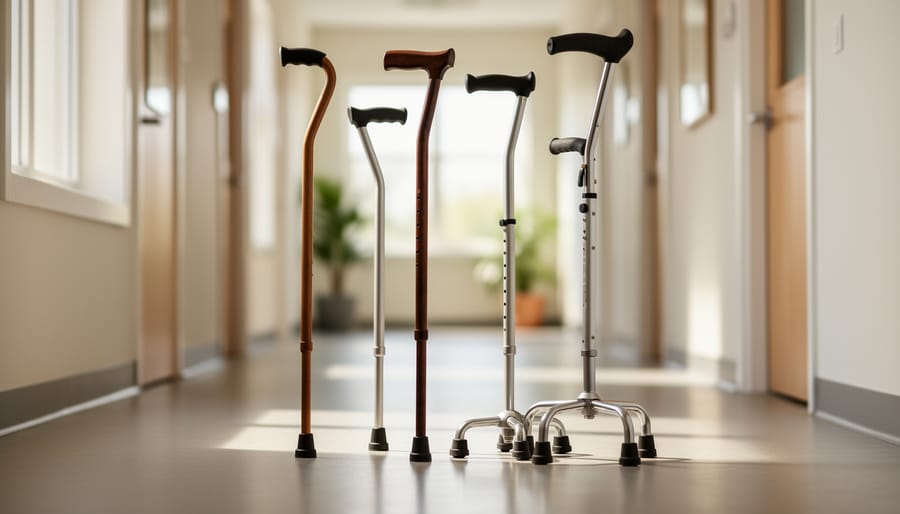
Canes provide essential balance support for individuals who need minimal assistance with walking but benefit from added stability. They’re often the first mobility aid recommended after injury or during recovery, and the lightest option for those managing chronic conditions that affect balance or leg strength.
Single-point canes work well for individuals who need light support on one side. They’re compact, easy to maneuver in tight spaces, and suitable for people with good overall balance who need occasional steadying. Quad canes feature a four-point base that provides significantly more stability, making them ideal for individuals with moderate balance challenges or those recovering from stroke. The wider base prevents tipping and allows the cane to stand independently when you need both hands free.
Forearm crutches distribute weight along the forearm rather than through the wrist, reducing strain during longer periods of use. They’re particularly helpful for individuals with arthritis or wrist weakness, and for those who need consistent support throughout the day.
Physiotherapists assess your gait pattern, balance capabilities, and strength before recommending a specific cane style. They’ll watch how you walk, test your stability, and evaluate how much weight you tend to place on support. Proper sizing matters, your elbow should bend at about 15 to 20 degrees when holding the cane, with the handle at wrist height when your arm hangs naturally at your side.
Canes are available through the Alberta Health Services Equipment Loan Program by contacting the Continuing Care Access Line at 1-855-371-4122. Hand grip style varies from standard curved handles to ergonomic designs that reduce pressure points, and your therapist will help you choose based on your hand strength and comfort needs.
5. Mobility Scooters: Extended Range for Community Access
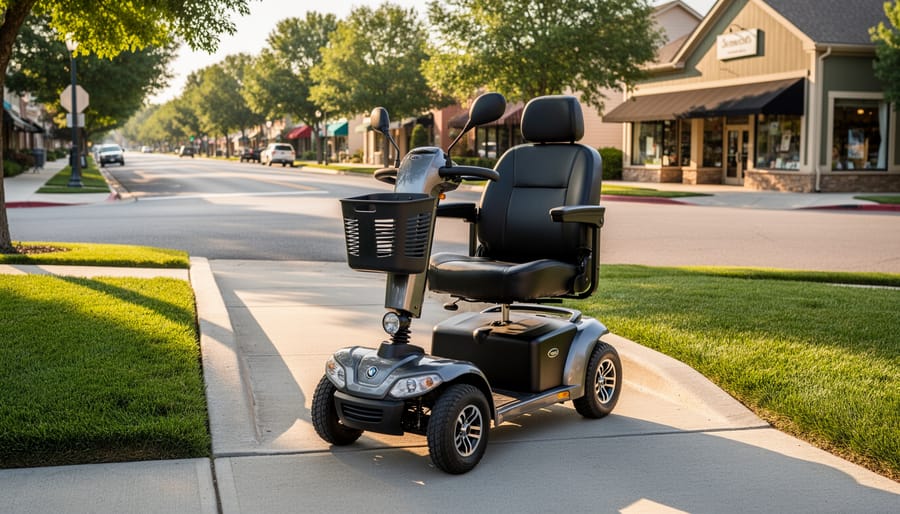
Mobility scooters bridge the gap for individuals who maintain the ability to walk short distances but struggle with the endurance or stamina needed for community outings, grocery shopping, or recreational activities. Unlike power wheelchairs designed for full-time use, scooters provide targeted support that extends your range without replacing walking entirely.
The choice between three-wheel and four-wheel models depends on where and how you’ll use the scooter. Three-wheel scooters offer a tighter turning radius, making them ideal for navigating indoor spaces like shopping malls or medical facilities. Their compact design allows you to maneuver through narrower aisles and doorways with greater ease. Four-wheel models provide enhanced stability on uneven outdoor terrain, sidewalks with cracks, gravel paths, or grassy areas, and typically handle inclines more confidently. The wider wheelbase makes them the better choice if your primary goal is accessing parks, outdoor events, or community spaces with varied surfaces.
Weight capacity, battery range, and portability matter too. Scooters designed for indoor use often disassemble into smaller pieces for transport in a vehicle, while outdoor models prioritize power and distance over portability. Understanding how far you need to travel on a single charge and whether you’ll need to transport the scooter regularly shapes which model fits your lifestyle.
Occupational therapy assessments evaluate these practical considerations alongside your community participation goals, whether that’s attending social events, running errands independently, or maintaining employment. This collaborative planning ensures the scooter genuinely supports your desired activities rather than sitting unused.
Mobility Plus offers both rental and purchase options for mobility scooters, with same-day rental availability at most locations to meet urgent needs during recovery or trial periods.
6. Stair Lifts: Safe Access to Multi-Level Homes
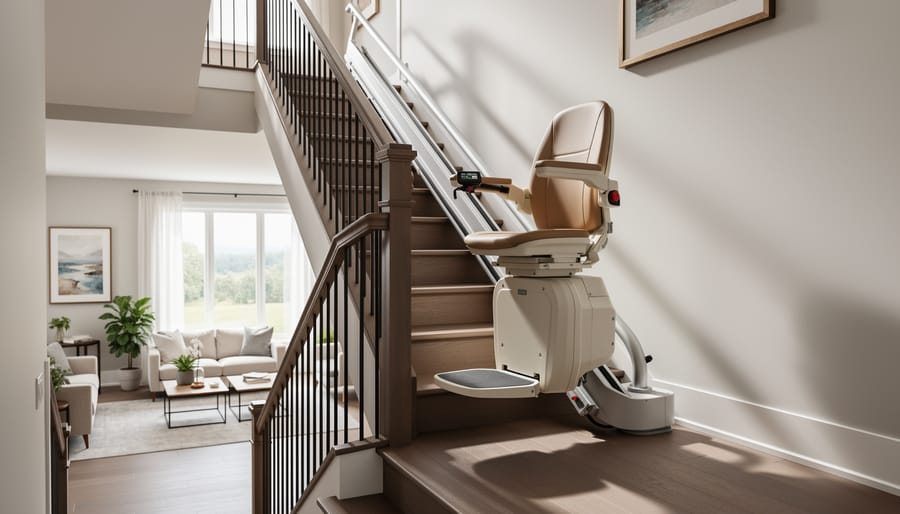
For many people returning home after rehabilitation, stairs become the barrier between full participation in daily life and being confined to a single floor. Stair lifts eliminate that barrier, allowing you to access your entire home safely and independently without the risk of a potentially devastating fall.
A stair lift is a motorized chair that travels along a rail mounted to your staircase, carrying you smoothly between floors. The chair typically features armrests, a seat belt, and simple controls that allow you to operate it with the push of a button. This solution preserves your ability to live in your multi-story home when climbing stairs is no longer safe or possible.
Straight rail stair lifts work for staircases with a single, uninterrupted run. These are more straightforward to install and generally less expensive. Curved rail systems accommodate staircases with turns, landings, or unusual configurations. Each curved rail is custom-measured and manufactured specifically for your home’s layout, which requires more planning and investment but provides a solution for virtually any staircase design.
When occupational therapists conduct discharge planning from rehabilitation, they evaluate whether your home environment supports your recovery goals. If stairs pose a safety concern but moving isn’t practical, a stair lift assessment becomes part of that planning process. The evaluation considers your physical abilities, the staircase configuration, transfer requirements, and how this modification fits into your broader independence plan.
Mobility Plus provides stair lift solutions in Calgary, offering both straight and curved options tailored to individual home layouts. Their team conducts in-home assessments to determine the right configuration and installation approach for your specific situation.
7. Bathing Aids: Safety and Dignity in Personal Care
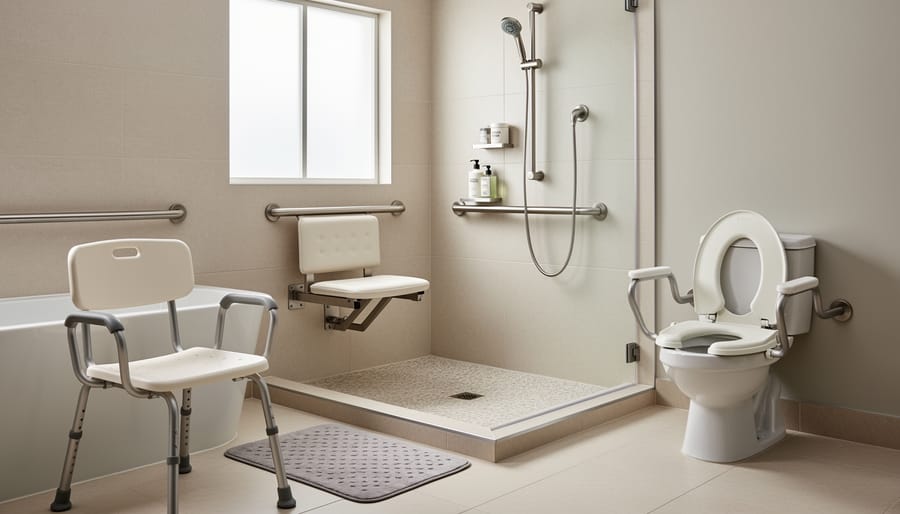
The bathroom is where most home injuries occur, and the right bathing aids can dramatically reduce fall risk while preserving dignity during personal care. Shower chairs and bath benches provide stable seating for individuals who can’t stand safely while bathing, with transfer benches extending across the tub edge to make getting in and out easier for those with limited leg strength or balance. Grab bars installed at strategic points, beside the toilet, inside the shower, near the tub, offer secure handholds during transfers and movement, while raised toilet seats reduce the distance individuals need to lower and raise themselves, easing strain on hips and knees.
The Red Cross Long Term Loans program provides these essential bathing aids to individuals with chronic but stable conditions, making them accessible without purchase costs. However, proper selection requires more than picking equipment from a catalogue. An occupational therapist conducts a thorough bathroom safety assessment, measuring clearances, evaluating transfer patterns, and observing how you currently manage these tasks to recommend the specific configuration that addresses your unique needs and home layout.
This personalized approach ensures the equipment works with your actual bathroom routine rather than against it. For individuals recovering at home, an occupational therapist providing in-home physiotherapy can assess your bathroom in its real context, recommending aids that fit your space constraints and teaching you safe techniques for using them during daily hygiene tasks.
8. Modular Ramps and Platform Lifts: Accessible Entry Solutions
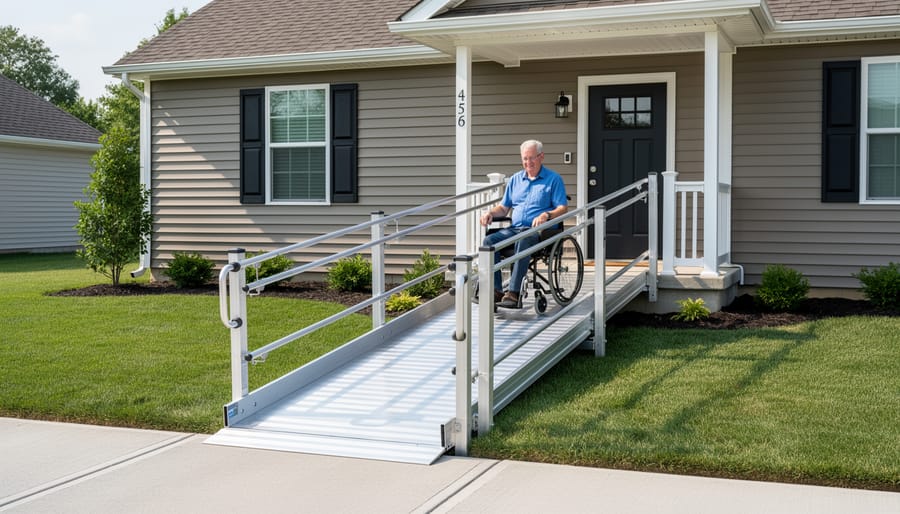
For individuals facing challenges with steps and thresholds, ramps and platform lifts transform homes from barriers into accessible spaces. These solutions bridge the gap between mobility limitations and independent living, making it possible to safely enter and exit your home without relying on others.
Portable ramps work well for single steps or small thresholds, typically one to two feet in height. They’re lightweight, easy to relocate if your living situation changes, and require no permanent modifications to your property. Modular ramp systems suit larger height differences and longer spans, such as front porches or decks with multiple steps. These systems can be configured to include landings and turns, accommodating the layout of your home while maintaining safe incline ratios that prevent strain or loss of control when using wheelchairs or walkers.
Vertical platform lifts serve as alternatives to ramps when space is limited or the vertical rise exceeds what a ramp can safely manage. They lift wheelchairs and scooters straight up, eliminating the need for long ramp runs. Platform lifts fit into tight spaces and can be installed indoors or outdoors, though they require more substantial installation than ramps.
Mobility Plus provides these accessibility solutions in Calgary, helping you match the right option to your home’s specific layout and your mobility needs. An occupational therapist can assess your entry points, measure height differences, evaluate available space, and recommend whether a portable ramp, modular system, or platform lift best supports your daily routine.
These aids don’t exist in isolation. They integrate with broader accessibility plans that may include interior modifications, bathroom safety equipment, and other supports that enable you to move confidently through your entire home and back into your community.
Understanding Your Options: Rental, Loan, and Purchase Programs in Calgary
Once you know which mobility aid best supports your recovery, the next step is securing it. Calgary offers three main pathways: loan programs, rental services, and outright purchase. Your choice depends on how long you’ll need the equipment and whether your condition is temporary or ongoing.
The Alberta Health Services Equipment Loan Program provides wheelchairs, walkers, and canes to Alberta residents at no cost. This program suits individuals recovering from surgery or injury who need equipment during rehabilitation. To access it, contact the Continuing Care Access Line at 1-855-371-4122. A healthcare professional will assess your needs and arrange delivery. The program requires you to return the equipment once you no longer need it, making it ideal for short-term recovery situations.
For chronic but stable conditions, the Red Cross Long Term Loans program offers home health and mobility equipment including wheelchairs and bathing aids. This program bridges the gap between temporary loan programs and purchasing, serving individuals who need equipment indefinitely but may not want to buy. The application process involves documenting your condition and demonstrating ongoing need.
Mobility Plus, a locally-owned franchise operating since 2007, provides rental options across their Calgary locations. They offer same-day rentals at most locations for mobility scooters, power wheelchairs, stair lifts, modular ramps, vertical platform lifts, walkers, rollators, and transport wheelchairs. Rental makes sense when you need specialized equipment quickly, want to trial a device before purchasing, or require something temporarily for travel or a specific event.
Choosing between these options comes down to timeline and certainty. Recovering from hip replacement with a clear six-month rehabilitation plan? The AHS loan program likely fits. Managing progressive arthritis that limits walking? Consider Red Cross or purchasing. Need a scooter for a two-week vacation? Rental handles that. Your rehabilitation team can help you evaluate which path aligns with your recovery goals and life situation.
Common Questions About Mobility Aids in Calgary
How do I know which mobility aid is right for me?
The safest approach is to work with a physiotherapist or occupational therapist who can assess your strength, balance, endurance, and specific mobility challenges. They’ll evaluate your home environment, daily activities, and recovery goals to recommend the most appropriate equipment for your situation.
Do I need a prescription for mobility aids?
It depends on how you’re accessing the equipment. The Alberta Health Services Equipment Loan Program typically requires a healthcare professional’s referral, while retail purchases and most rentals don’t. If you’re working with a rehabilitation team, they’ll handle the necessary documentation.
How quickly can I get a mobility aid in Calgary?
Timing varies by program. Mobility Plus offers same-day rentals at most locations, making them ideal for urgent needs. The Alberta Health Services Equipment Loan Program, accessible through the Continuing Care Access Line at 1-855-371-4122, has longer processing times but provides equipment at no cost for eligible individuals.
Can I try a mobility aid before committing?
Yes. Most rehabilitation professionals incorporate trial periods into their assessments, allowing you to test equipment in real-world settings. Rental programs also let you experiment with different options before making a purchase decision.
What if my needs change during recovery?
Mobility needs often evolve as you heal or adapt. Your rehabilitation team will conduct regular reassessments and adjust your equipment accordingly, you might progress from a walker to a cane, or switch from a manual to power wheelchair as your condition changes.
These questions reflect the concerns we hear most often from patients and families navigating mobility equipment decisions. The key takeaway is that you don’t have to figure this out alone. Whether you’re recovering from surgery, managing a chronic condition, or supporting a family member, professional guidance ensures you get equipment that truly matches your needs rather than guessing based on online research alone.
Calgary offers multiple pathways to access mobility aids, and understanding your options helps you make informed choices. An interdisciplinary team can connect you with the right programs, whether that’s a loan through Alberta Health Services, a rental through Mobility Plus, or a purchase through specialized providers. The goal is always the same: finding solutions that support your independence and quality of life.
Moving Forward with the Right Support
Selecting the right mobility aid isn’t a decision you need to make alone. It’s a collaborative process that brings together your goals, your family’s insights, and the expertise of an interdisciplinary rehabilitation team, physiotherapists, occupational therapists, and other specialists who understand how equipment choices affect your recovery and daily life. The right aid doesn’t limit your independence; it restores it, giving you the freedom to participate in activities that matter most.
Professional assessment makes all the difference. A rehabilitation specialist can evaluate your strength, balance, endurance, and home environment to recommend solutions that truly fit, and adjust those recommendations as your needs change through recovery. Whether you’re navigating a temporary injury or managing a chronic condition, the personalized approach helps you avoid trial-and-error frustration and move directly toward greater mobility.
At Mackay Therapy and Rehabilitation, we’re committed to helping Calgary residents find the right mobility solutions for their unique challenges. Our team works closely with you to assess your needs, connect you with appropriate equipment providers, and ensure you have the training and support to use your mobility aid safely and effectively. Reclaiming your independence starts with the right support, and we’re here to provide it.