
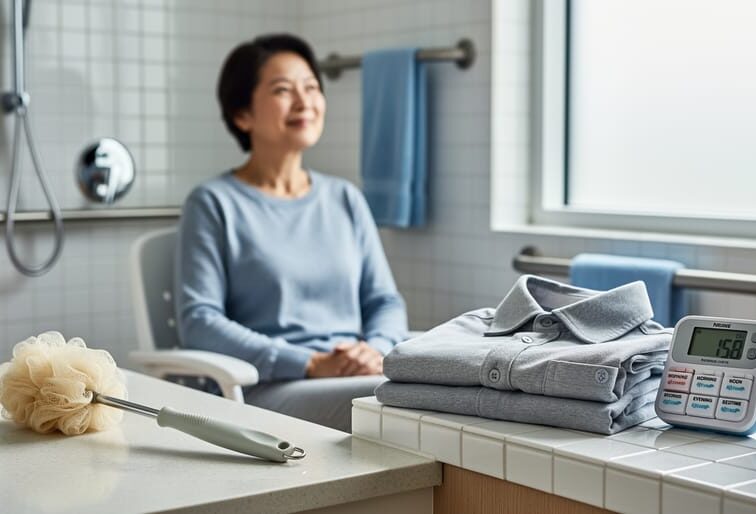

Low-tech assistive tools, such as a shower chair, a long-handled sponge, a velcro-fastened shirt, or a talking pill organiser, can help you or someone you love wash, dress, eat and take medication with less hands-on help after an injury. You don’t need a power source or a steep learning curve. You need the right tool matched to the right task, introduced at the right time.
That matching is where most families get stuck. The options are many, and the wrong choice can mean wasted money or, worse, a tool that makes a task less safe. This guide walks you through which simple aids suit common daily tasks, how to choose between them, and how to start using them with confidence. We’ll also cover how to tell whether a tool is truly working, so you’re not guessing.
Personalized care matters here. Recovery looks different for every person, and the best results come from an interdisciplinary team, including occupational therapists and rehabilitation physicians, who look at your whole picture. If you’re wondering why a physiatrist often leads that team, the short answer is that they coordinate the full plan around what you want to get back to doing.
Small tools can make a big difference. Let’s find the right ones for you.
Why Simple Tools Matter in Physiatrist-Led Rehabilitation Programs
In a physiatrist-led program, the physiatrist (a doctor who specialises in rehabilitation) oversees your recovery and brings together therapists from different disciplines. Occupational therapists look at how you manage daily routines, physiotherapists focus on movement and strength, and speech-language pathologists support communication and swallowing. Because these professionals share one plan, the right tool can support each person’s goals instead of being picked in isolation.
That is where simple tools earn their place. A shower chair, a long-handled sponge or a talking pill organiser is a form of assistive technology: equipment or a device that helps you complete tasks you may not be able to do because of your disability or injury. Used well, these items let you wash, dress, eat, take medication or move around the home with less hands-on help.
Personalized care matters just as much as the tool itself. Two people with similar injuries can need very different supports, depending on their home, their routine and what they most want to get back to doing.
Picture someone who finds dressing exhausting after an injury and relies on a family member each morning. Their team introduces a long-handled shoehorn and velcro fasteners, and they practise with their occupational therapist. Over time, getting ready becomes something they can do themselves, and their confidence grows along with it.
Small tools can have a big effect. Each task you can do for yourself is a step toward independence, and your care team is there to help you find the right ones.
Tools and Materials: Everyday Aids for the Bathroom, Dressing, Eating and Medication
Bathroom Supports for Washing and Toileting
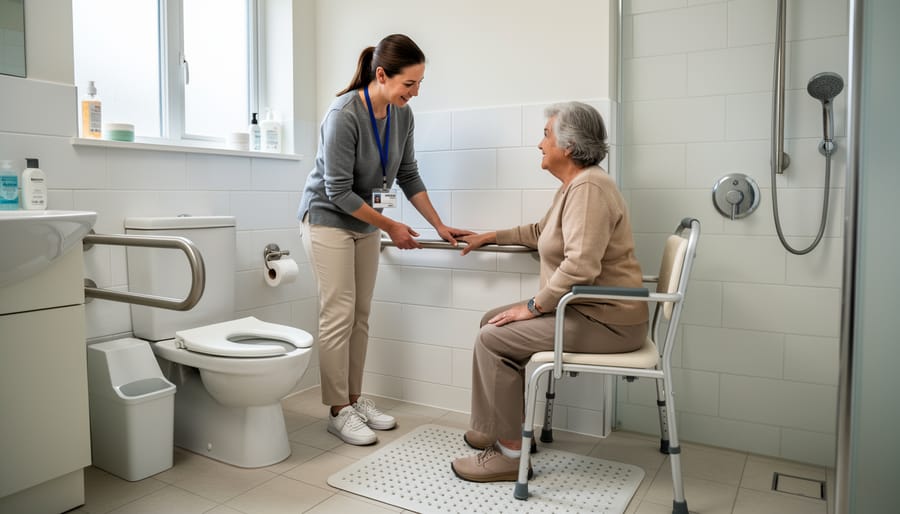
Bathrooms can be tricky after an injury, because wet surfaces, tight spaces and repeated standing or sitting all add up. The good news is that a handful of simple tools can take much of the strain out of washing and toileting.
Grab bars give you something steady to hold when stepping in or out of the shower or lowering yourself onto the toilet. A shower chair or a bathtub seat lets you sit while you wash, which is helpful if standing for long feels tiring or unsteady. A non-slip mat adds grip to the floor of the bath or shower, so you can move with a bit more confidence.
A long-handled sponge helps you reach your back and feet without stretching or bending too far. Raising the toilet seat makes sitting down and standing up easier on the hips and knees. A shower phone means you can call for help if you need it, without having to leave the bathroom.
Your occupational therapist can talk through which of these suit your body, your home and your daily routine.
Dressing Aids That Make Getting Ready Easier
Getting dressed can become one of the hardest parts of the day after an injury, but a few simple tools can take the strain out of it. A long-handled shoehorn lets you slip a shoe on without bending down or reaching to your feet. Velcro fasteners can replace small buttons, laces or hooks, so you can close a garment with less fiddly finger work. A stocking puller helps you draw socks or stockings on without stretching or twisting, and a pair of rubber gloves gives you extra grip when you’re dealing with tight stockings or tights.
None of these tools is complicated, and that’s the point. Each one takes a single step in your routine and makes it easier to manage on your own. Your occupational therapist can show you which ones suit your movement and strength, so you start with the right fit rather than guessing.
Helpers for Eating, Drinking, Cleaning and Taking Medication
Mealtimes, a cup of tea and taking medication are small moments that shape the whole day, and the right everyday tool can make them far less stressful. Small devices for eating, drinking and cleaning are designed to help with exactly these tasks when hand strength, grip or coordination has changed after an injury. A therapist can show you what’s available and help you try options out for size and feel.
Think about where the day tends to get frustrating. If holding a cup or keeping a grip on cutlery is tricky, there are practical items made for those moments. If wiping a bench or washing up feels like too much, small cleaning aids can take some of the strain. Under the NDIS, consumables in Core supports can cover low-cost items like these for eating, drinking or cleaning, so it’s worth asking about them.
A talking pill organiser deserves a special mention. It uses spoken prompts to help someone take medication at the right times, which can ease worry for the person and for the family members supporting them at home. Because the right choice depends on the individual, your occupational therapist can help you decide which devices suit your routine, and the wider rehabilitation team can build them into your personalized plan.

Safety Warnings to Keep in Mind Before You Start
Simple tools can make daily life easier, but they work best when they suit the person using them. Two people with the same injury may need completely different equipment, because each person’s body, home and routine are different. That is why professional input is the safest place to start, and why a therapist who knows your goals can steer you toward items that actually fit.
Once you have a tool, ask your therapist to show you how to use it correctly. A quick demonstration in the bathroom or at the bedside can save a lot of worry later, and it builds confidence from the very first try. Don’t be shy about asking questions. That is what your team is there for.
If an item feels unstable, uncomfortable or just doesn’t seem right for you, stop using it and check in with your care team. Needing a change is not a failure. It simply means the plan can be adjusted, and the right tool is out there.
Try not to guess when choosing equipment for bathing, toileting or mobility. These are the areas where a good match matters most, so it is worth taking the time to get advice before you buy.
Step-by-Step: How to Choose and Start Using the Right Tools
Start With a Conversation About Your Daily Routine
The best place to begin is a simple conversation about your day. Before choosing any equipment, speak with an OT, an AT advisor or your NDIS contact. They can help you decide what makes sense for your situation, so you’re not guessing.
An OT looks at how you move through daily life, and occupational therapy is built around exactly this: helping you do the tasks that matter to you.
Come ready to describe a typical day. Mention what feels hard, such as washing, dressing, eating or taking medication. Share what you want to do independently again, and what worries you most. Family members can join in too. Small details, like a tricky bathroom setup, often point straight to the right tool.
Match Each Tool to Your Own Limitations
Two people can have the same injury and need completely different tools. That’s why personalized care matters. A physiatrist-led team looks at the whole picture: how you move, what you find hard, how your home is laid out and what your day actually looks like.
Consider someone living in a two-storey home with a narrow bathroom. They may benefit most from a shower chair and grab bars. Another person with tight fine-motor control might get far more from velcro fasteners and a stocking puller. Someone who struggles to remember medication times could find a talking pill organiser makes the biggest difference.
Your occupational therapist can talk through these options with you and help you choose what fits. Start with the task that frustrates you most, and let the right tool follow from there.
Put the Equipment to Work in Everyday Life
Once you have the right tools, start small. Pick one task, such as washing at the sink or getting dressed, and use your new equipment just for that. A shower chair, a long-handled sponge or a velcro fastener can make that single routine feel noticeably easier, and that’s a win worth noticing.
Give yourself time to practise. Your therapist can show you how to use each item correctly, and repeating the task a few times helps it feel natural. If something feels awkward, mention it at your next session rather than pushing through.
Once one task feels comfortable, add another. Over days and weeks, those small steps build real confidence. Many people find they need less hands-on help with the things that matter most to them, and that growing independence is exactly what your care team is working toward.
Understanding Funding Support for Low-Cost Aids
Cost is often the first worry when families start looking at everyday aids, so it helps to know that some of the simplest items may be easier to fund than you’d expect. Under the NDIS, consumables in Core supports can cover low-cost assistive technology, such as non-slip bathmats or small devices for dressing, eating, drinking or cleaning.
In plain language, assistive technology helps complete tasks you may not be able to do because of a disability. It’s simply equipment or a device that fills the gap, whether that’s a grippy mat in the bathroom or a small tool that makes getting dressed less of a struggle.
Every person’s situation is different, so the best next step is a conversation. Your occupational therapist, an assistive technology advisor or your NDIS contact can talk through what applies to you and help you plan purchases that fit your goals. Bring a list of the daily tasks you’re finding hard, and they can point you toward the right tools.
How to Tell Whether a Tool Is Working and What to Do Next
A good tool earns its place by making daily life easier, so check in on how it’s really going. Ask yourself a few simple questions. Does the task feel easier than before? Do you need less hands-on help to finish it? Do you feel more confident when you do it? If the answer is yes, the tool is doing its job.
It can help to notice small wins over a couple of weeks. Perhaps washing now feels steadier, or taking medication no longer needs a reminder from someone else. Jot these moments down so you have real examples to share.
Recovery keeps moving, and your needs will too. If a tool feels awkward, no longer fits, or a new task has become hard, go back to your occupational therapist (OT) or your physiatrist-led team. They can adjust, swap or add tools to suit where you are now, and that is a normal, positive part of the process.
Families and caregivers are warmly welcome at these reviews. They often see progress and challenges that are easy to miss, and their input helps your team shape a plan that truly works at home.
Frequently Asked Questions About Low-Tech Assistive Technology
What is low-tech assistive technology?
It’s everyday equipment that helps you complete tasks that have become difficult because of an injury or disability. A shower chair, a long-handled sponge or a talking pill organiser are good examples.
Who should I speak with before choosing equipment?
Start with an occupational therapist (OT), an assistive technology advisor or your NDIS contact. They can look at your situation and help you pick tools that suit you, rather than leaving you to guess.
What does a physiatrist do in a rehabilitation program?
A physiatrist is a doctor who specialises in rehabilitation. They coordinate an interdisciplinary team, such as occupational therapists, physiotherapists and speech-language pathologists, to build a care plan around your goals.
Can low-cost aids be funded under the NDIS?
Under the NDIS, consumables in Core supports can cover low-cost assistive technology, such as non-slip bathmats or small devices for dressing, eating, drinking or cleaning. Your OT, AT advisor or NDIS contact can explain what applies to you.
Which tools help with dressing and in the bathroom?
For dressing, a long-handled shoehorn, velcro fasteners, a stocking puller and rubber gloves for tight stockings can all make getting ready easier. In the bathroom, grab bars, a bathtub seat, a non-slip mat and a raised toilet seat are common choices.
You may wonder whether you need professional advice first. It’s the safest starting point, because the right tool depends on your own needs, home and routine. A therapist can also show you how to use each item correctly, which is a big part of what makes rehabilitation work. Many families find that this guidance fits naturally into a wider approach to personalized recovery where every tool and every goal is chosen with the individual in mind.
Finding the right low tech assistive technology comes down to three simple steps. Start by speaking with an occupational therapist or another professional who can look at your daily routine. Then choose tools that fit your own limitations, not someone else’s. Finally, put them to work so everyday tasks feel easier and you can do more on your own.
None of this has to be done alone. In a physiatrist-led program, a doctor who specialises in rehabilitation brings together an interdisciplinary team, so your occupational therapist, physiotherapist and other clinicians are all working toward the same goals. That teamwork is what turns a shower chair or a long-handled sponge into part of a plan built around you.
Progress often comes in small wins. One task made easier can build the confidence to take on the next, and your team can adjust the plan as you recover.
If you or someone you love is ready to explore what’s possible, we’d love to hear from you. Reach out to Mackay Therapy and Rehabilitation to talk about a personalized plan that supports your independence, one step at a time.