


The right mobility aid is the one that matches how you actually move through your day, not the most expensive model or the one a friend swears by. For most seniors, that means starting with a simple question: where do I need help, at home, outdoors, or both? A cane or wheeled walker supports balance and short walks. A motorized scooter covers longer distances for people who tire quickly. A wheelchair suits those who can’t walk safely on their own.
Cost matters, and it varies widely. Motorized scooters in Canada are listed at roughly $2,995 to $9,500, though Ontario’s Assistive Devices Program (ADP) covers 75% of the cost for eligible devices. A wheeled walker, for example, is covered at 75% of $328, and ODSP recipients may have the remaining 25% covered too. If you only need equipment for a short time, the HELP program lends wheelchairs, walkers, and other devices at no cost.
You’re far from alone in this. Over 108,550 Canadians use motorized scooters every day, and the right aid often gives people back the independence they feared losing. This guide compares the main types, explains what to weigh before you buy, and shows how an interdisciplinary care team can help you choose a device that fits your body, your home, and your goals.
Key Buying Factors: What to Consider Before You Choose a Mobility Aid

Matching the Aid to Strength, Balance, and Daily Life
A mobility aid should fit the person first and the product second. Start with three questions. How strong are the legs and arms? How steady is the balance? How long can this person stay on their feet before tiring?
Someone with good strength but occasional unsteadiness may only need a cane or a wheeled walker for extra stability. Someone who gets winded halfway through a grocery trip might do better with a rollator that has a built-in seat. If upper-body strength is limited, a heavy manual wheelchair could do more harm than good, since pushing it adds strain rather than relief.
Daily routines matter just as much. Think about stairs, narrow hallways, bathroom doorways, and how often the person heads out into the community. An aid that works beautifully in an open living room may be awkward in a tight kitchen.
This is where a personalized assessment pays off. Through occupational therapy a clinician looks at how you move through your actual day, while a physiotherapist evaluates strength and balance. Together they help you avoid buying something that offers too much, too little, or simply doesn’t fit your body or your home. Getting it right the first time means more confidence, safer movement, and money well spent.
Thinking Beyond the Sticker Price: Cost of Ownership
The price tag on a mobility aid is only the starting point. A fuller comparison looks at four things: the purchase price, how much of it funding might cover, what upkeep will cost, and what protection comes with the product.
Prices vary widely by category. Motorized scooters, for example, are listed at roughly $2,995 to $9,500 CAD, so the type of aid you choose shapes your budget far more than the brand does. Funding can narrow that gap. Ontario’s Assistive Devices Program (ADP) covers 75% of costs for eligible items, including motorized scooters, and 75% of $328 for eligible wheeled walkers. Because coverage depends on eligibility, it’s worth confirming with your care team before you buy, not after.
Then think about the years ahead. Tires wear down, batteries lose capacity, brakes and wheels need adjusting, and a well-fitted aid is one you’ll actually keep using. Ask what maintenance looks like and who handles repairs, since a lower upfront price can cost more if servicing is hard to arrange.
Finally, check the warranty. Terms differ from one product and supplier to the next, so ask what is covered, for how long, and what the process is if something goes wrong. Don’t assume a return window exists; confirm it directly with the supplier and get the details in writing.
Types of Mobility Aids Compared: From Canes to Power Chairs
Walkers, Rollators, and Canes for Balance and Stability Support
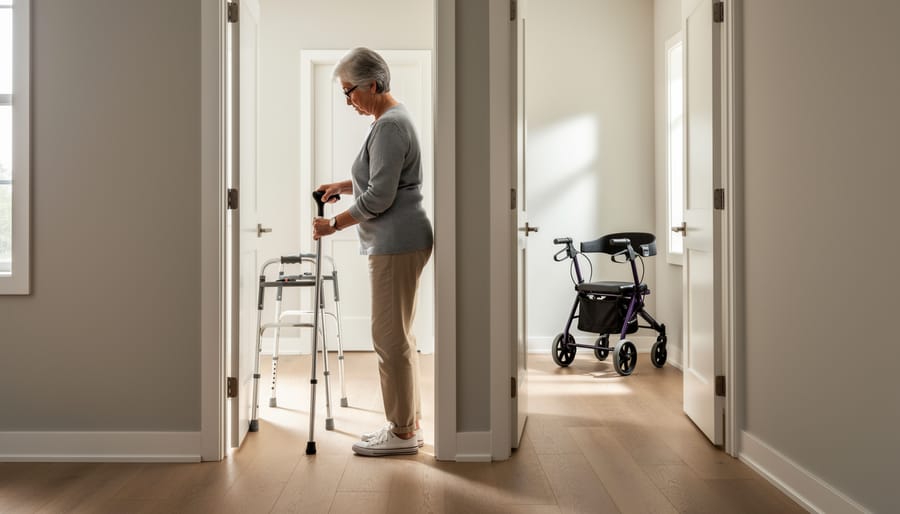
Lighter, everyday aids are often the right starting point for seniors who feel a little unsteady but can still walk on their own. A cane gives one point of extra support and works well for mild balance concerns or discomfort on one side. It can also give a helpful bit of reassurance on uneven ground. Because a cane only takes some of your weight, it may not be enough if you feel wobbly on both sides or tire quickly.
That’s where walkers come in. A standard wheeled walker has two front wheels and offers a sturdy frame to lean on, which suits people who need firm, steady support while walking indoors. A rollator is a different design: it typically has three or four wheels, hand brakes, and often a built-in seat. This makes it a good fit for people who can walk longer distances but need to stop and rest. If you have been using a cane and notice yourself reaching for furniture, walls, or someone’s arm, that’s usually a sign to consider something more supportive.
Choosing among these options is a good example of how assistive technology should be matched to the person, not the other way around. Our physiotherapists and occupational therapists work together to check strength, balance, and daily routines so the aid you choose feels natural, safe, and encouraging to use.
Wheelchairs and Scooters for Longer Distances and Lower Energy
When walking a longer distance leaves you drained, a wheelchair or scooter can give you back your outings. The right choice depends mostly on your endurance, your upper-body strength, and how you plan to get around your community.
A manual wheelchair is light and simple, but you or a helper has to propel it. That takes real shoulder and arm strength, and it can tire the person pushing as much as the person sitting. If a family member will be doing most of the pushing, think about their stamina too.
A power wheelchair uses a joystick or similar control, so it suits someone with limited upper-body strength or low energy. It offers more support and positioning options than a scooter, and it works well indoors and out. The tradeoff is size and weight, so check your doorways, hallways, and how you’ll transport it.
A motorized scooter is steered with a tiller, so it works best if you can sit upright, hold the handlebar, and safely get on and off. It’s popular for errands and outdoor distances. Over 108,550 Canadians use motorized scooters daily, so you’re far from alone in considering one. Prices are listed at about $2,995 to $9,500 CAD, which is why checking funding matters.
Because these are bigger decisions, an assessment by a physiotherapist and occupational therapist can help you test options against your strength, home, and daily goals before you commit.
Funding and Assistance: Making Mobility Aids More Affordable in Ontario

Short-Term Loans: Trying Before You Commit
If you’re recovering from surgery or a fall, or you’re simply unsure which aid will suit you long term, borrowing before buying can take real pressure off. In Ontario, HELP is a programme that provides short-term loans of wheelchairs, walkers, and other mobility devices at no cost through home health. That means you can use a device during recovery, see how it fits your home and routines, and decide later whether a purchase makes sense.
A loan can also fit neatly into a plan of personalized recovery since your needs often change as you get stronger. Your care team can watch how you manage the borrowed equipment and help you choose something better matched to your goals.
Availability can vary, so check locally before counting on a specific device. If you do move toward buying, review the ADP mobility coverage details first, so you know what funding may apply.
Our Recommendations: Matching Mobility Aids to Common Senior Needs
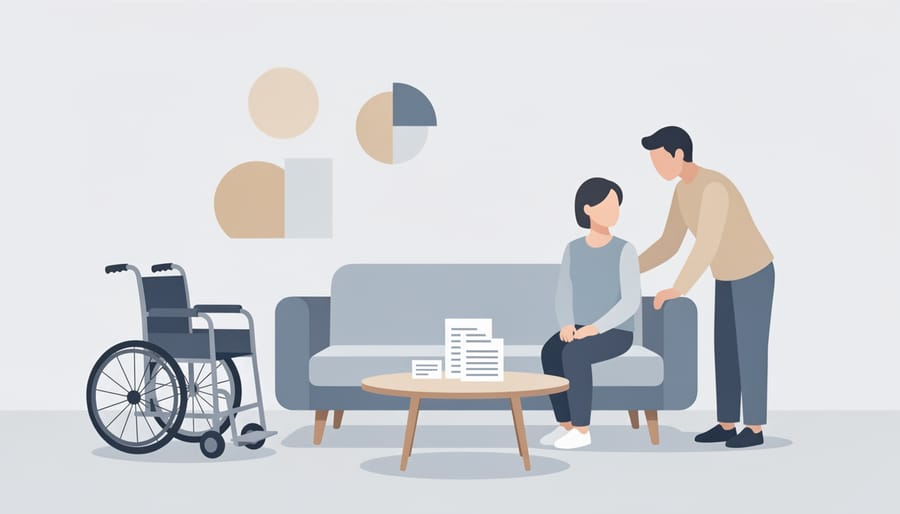
Every senior’s situation is different, so think of these as starting points rather than prescriptions. Each scenario points to a category worth exploring, and in every case a professional assessment will confirm the right fit.
Extra balance support at home. If you feel steady most days but want a little more security on uneven floors or when getting up, a cane or a standard wheeled walker is often a sensible place to start. A rollator (a walker with wheels, hand brakes, and usually a built-in seat) can suit people who want to move more smoothly through the house. Eligible wheeled walkers may qualify for Ontario’s Assistive Devices Program, which covers 75% of the cost, up to 75% of $328.
Limited stamina for errands. When walking tires you out before the shopping is done, a rollator with a seat lets you rest along the way. If distances are still a struggle, a motorized scooter may open up the community again. Scooters are common, with over 108,550 Canadians using one daily, and listed prices run $2,995 to $9,500 CAD, with ADP funding covering 75% for eligible scooters.
Recovering from surgery or a fall. Needs can change quickly during recovery, so a short-term loan is often wiser than a purchase. The HELP program lends wheelchairs, walkers, and other mobility devices at no cost, which lets you adjust as you heal. Pairing this with in-home physiotherapy means your therapist can watch how you use the device in your own space.
Significant strength limitations. If your arms or legs tire quickly, a manual wheelchair may demand more effort than you have. A power wheelchair or scooter can protect your energy for the things you enjoy, but fit and controls matter greatly here.
Consider one senior who came to us hesitant after a fall, worried about leaving the house at all. Our physiotherapist and occupational therapist worked together on a personalized plan, matching a device to her routines and practicing with it until it felt natural. Step by step, her confidence returned, and she began doing the everyday things she had been avoiding.
Common Mistakes to Avoid When Buying a Mobility Aid
Even careful shoppers stumble here, and every one of these missteps has a simple fix.
Buying without an assessment. It’s tempting to pick something that looks right. Instead, ask a physiotherapist and occupational therapist to look at your strength, balance, and routines first, so the aid fits the person.
Choosing on price alone. A lower price can cost more if the aid doesn’t suit you. Compare comfort, durability, and funding together. Motorized scooters, for example, are listed at $2,995 to $9,500 CAD, so the real cost depends heavily on coverage.
Ignoring your home. Measure doorways, hallways, and turning space before you buy. A great aid that won’t fit through the bathroom door won’t help anyone.
Overlooking transport and storage. Think about how it will travel in the car and where it will live at night. Weight and folding ability matter more than most people expect.
Skipping the trial. Try the aid in real situations, like getting up from a chair or crossing a parking lot, before you commit.
Not planning for change. Needs shift after recovery or over time. Ask your care team how the aid might adapt, and remember that low-tech aids can complement a larger device.
Missing out on funding. Ontario’s Assistive Devices Program covers 75% of costs for eligible items, so confirm your eligibility first.
Frequently Asked Questions About Mobility Aids for Seniors
How do I know which mobility aid is right for me?
The best fit depends on your strength, balance, endurance, home layout, and daily goals. A physiotherapist and occupational therapist can look at all of these together, so you don’t end up with something too much, too little, or poorly fitted.
What is the difference between a walker and a rollator?
A standard walker is typically lifted or pushed forward with each step. A rollator is a wheeled walker that rolls as you walk, often with hand brakes, and it can suit people who need balance support but can keep a steady stride.
Does Ontario help pay for mobility aids?
Yes. The Assistive Devices Program (ADP) covers 75% of the cost for eligible items, including motorized scooters and eligible wheeled walkers. ODSP recipients may be able to have the remaining 25% covered on eligible wheeled walkers, so confirm your eligibility with your care team before you buy.
Can I borrow a mobility aid before buying?
Often, yes. The HELP program offers short-term loans of wheelchairs, walkers, and other mobility devices at no cost through home health, which can be a helpful way to try something out. Availability can vary locally, so check what’s offered near you.
How much does a motorized scooter cost?
Motorized scooters are listed at roughly $2,995 to $9,500 CAD. Because ADP covers 75% for eligible scooters, your out-of-pocket cost may be considerably lower.
Who can help me choose?
A care team that includes a physiotherapist and an occupational therapist is a great place to start. At Mackay Therapy and Rehabilitation, our interdisciplinary team works with you and your family to match an aid to your needs, routines, and confidence.
Still have a question that isn’t covered here? That’s completely normal, and your care team is there to help you sort through it step by step.
Choosing a mobility aid doesn’t have to feel overwhelming. Start by understanding the person: their strength, balance, endurance, and the spaces they move through every day. Then compare the types, from canes and rollators to wheelchairs and scooters, with those needs in mind. Look into funding early, including Ontario’s Assistive Devices Program and short-term loan options, so cost doesn’t limit a good choice. And steer clear of the common missteps, like buying without guidance or overlooking doorways and storage.
You don’t have to figure it out alone. At Mackay Therapy and Rehabilitation, our interdisciplinary team works together with you and your family to build a personalized plan that supports your independence and your confidence. If you or someone you love is ready to move more safely and freely, we’d be glad to help. Reach out to us to arrange a personalized assessment and take the next step with a team that’s on your side.