


Pediatric occupational therapy builds the essential skills children need to participate fully in daily life, from self-care and play to learning and social interaction. When developmental challenges, sensory processing differences, or physical limitations create barriers, a structured approach using core therapeutic principles helps children gain independence and confidence. These foundational elements work together through personalized assessment, targeted intervention, and family collaboration to address each child’s unique needs.
The foundation of effective pediatric occupational therapy rests on understanding how children develop skills in a logical progression. Just as a house requires a solid base before walls and a roof, children master basic abilities before advancing to complex tasks. Gross motor control precedes fine motor precision. Sensory processing supports attention and regulation. Core strength enables hand coordination for writing and self-feeding.
At Mackay Therapy and Rehabilitation, our interdisciplinary team recognizes that no two children follow identical developmental paths. Some struggle with sensory sensitivities that make clothing textures unbearable. Others face motor planning challenges that turn shoe-tying into an exhausting puzzle. Many experience a combination of factors that require comprehensive support.
The therapeutic process begins with thorough evaluation to identify specific areas of difficulty and strength. From there, occupational therapists design interventions that feel like play to children but systematically build the neurological connections and physical abilities they need. Parents and caregivers become active partners, learning strategies to reinforce progress at home and advocate effectively for their child’s needs in school and community settings.
Understanding the Core Building Blocks of Pediatric Occupational Therapy
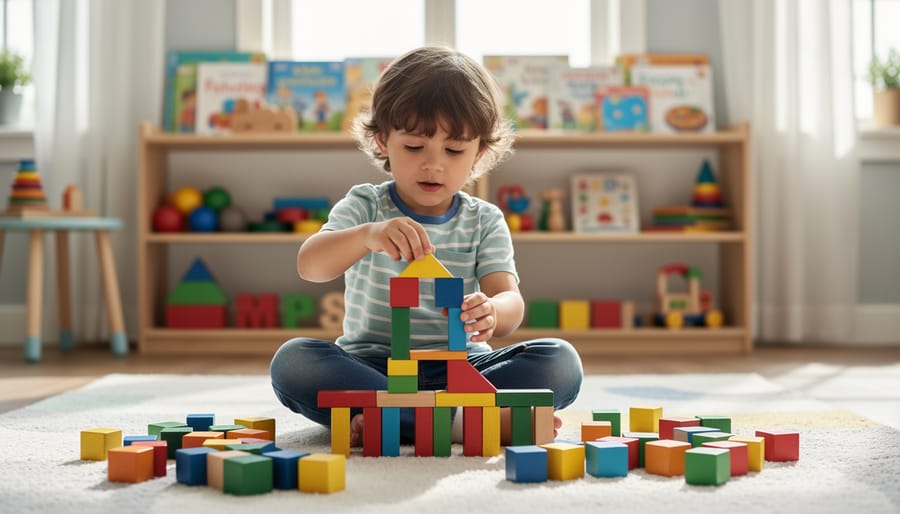
Pediatric occupational therapists work on a foundation of interconnected skill areas that children need to thrive in their daily lives. Rather than focusing on isolated tasks, these professionals address the essential capabilities that support everything from classroom participation to playground interactions.
At the heart of effective pediatric occupational therapy is sensory processing, how a child’s nervous system receives, interprets, and responds to information from their environment. Some children struggle with overwhelming sensory experiences, while others seek constant stimulation. Occupational therapists help children develop appropriate responses to touch, sound, movement, and visual input, which affects their ability to focus, learn, and interact comfortably with their surroundings.
Motor skills form another crucial foundation. Fine motor abilities, the precise movements of hands and fingers, enable children to button shirts, hold pencils, and manipulate small objects. Gross motor skills involving larger muscle groups support running, climbing, maintaining posture, and coordinating both sides of the body together. These physical capabilities directly impact a child’s confidence and independence in play, self-care, and school activities.
Cognitive development encompasses the mental processes children need to solve problems, follow directions, organize their thoughts, and sustain attention. Occupational therapists work on skills like planning a sequence of actions, managing time, and adapting when tasks don’t go as expected. These abilities prove essential for academic success and navigating the demands of childhood.
Daily living skills, sometimes called activities of daily living, include everything children need to care for themselves independently. Dressing, feeding, toileting, grooming, and managing belongings all require a combination of motor control, sensory tolerance, and cognitive planning. As children master these tasks, they gain self-esteem and the freedom to participate more fully in family and community life.
Each child’s therapy addresses whichever combination of these areas presents challenges. A comprehensive approach recognizes that these building blocks don’t develop in isolation, sensory difficulties often affect motor control, which in turn impacts self-care abilities. Effective pediatric occupational therapy strengthens the specific foundational skills each individual child needs while considering how they work together to support overall development.
Who Benefits from Pediatric Occupational Therapy Services
Pediatric occupational therapy supports a remarkably diverse range of children, from infants to teenagers facing various developmental, physical, or emotional challenges. Understanding who can benefit helps families recognize when reaching out for professional support might make a meaningful difference.
Children with developmental delays, those who aren’t meeting expected milestones for their age in areas like movement, communication, or self-care, often find significant support through occupational therapy. The approach helps them build the foundational skills needed to close the gap and participate more fully in age-appropriate activities.
Physical disabilities, whether present from birth or acquired through injury or illness, create unique challenges in daily functioning. Occupational therapy helps these children develop adaptive strategies and build strength and coordination to increase independence in everything from getting dressed to participating in school activities.
For children with sensory processing disorders, everyday experiences like loud noises, certain textures, or crowded spaces can feel overwhelming or barely noticeable. Therapists work with these children to develop better sensory integration, helping them respond more comfortably to the world around them. Research shows that occupational therapy benefits children across numerous diagnostic categories through this personalized approach.
Children on the autism spectrum frequently work with occupational therapists to develop social skills, manage sensory sensitivities, and build independence in daily routines. The individualized nature of therapy allows professionals to address each child’s specific strengths and challenges.
Learning disabilities that affect a child’s academic performance often have underlying components that occupational therapy can address, including visual-motor integration, attention regulation, and organizational skills. Mental health concerns such as anxiety or behavioral challenges also benefit from therapeutic intervention, as therapists help children develop coping strategies and emotional regulation skills.
The key to effective pediatric occupational therapy lies in its personalized care approach. Each child receives an individualized assessment and treatment plan that addresses their unique needs, builds on their strengths, and involves their family in the therapeutic process. This tailored approach recognizes that no two children are exactly alike, and what works for one may need adjustment for another.
The Five Essential Building Blocks in Practice
Sensory Integration and Processing
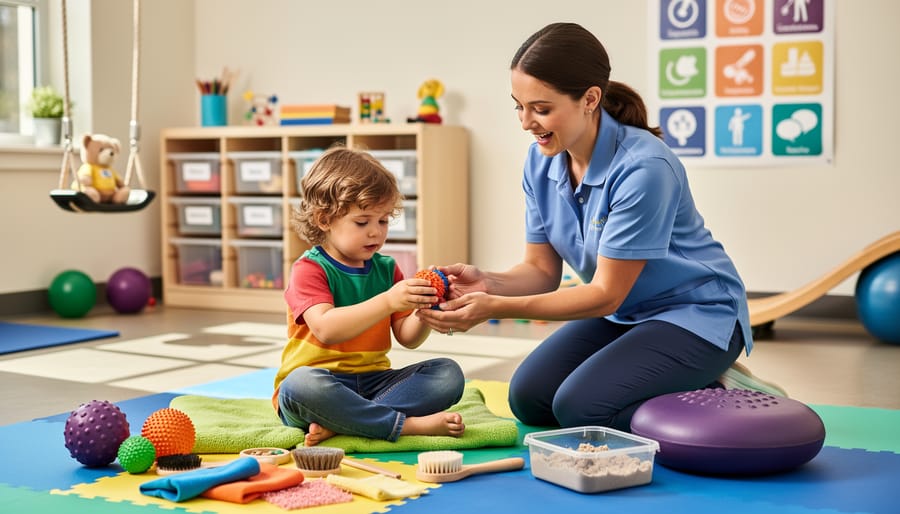
Therapists address sensory challenges through carefully designed activities that help children regulate their responses to touch, sound, movement, and other stimuli. For children who become overwhelmed by certain textures or noises, sensory integration therapy helps them gradually build tolerance through controlled exposure. A child who avoids messy play might start by touching a soft brush, then progress to finger painting with pudding before tackling sand or clay.
Conversely, kids who seek intense sensory input benefit from activities that safely meet their needs. These children might jump on trampolines, crash into foam pits, or carry weighted objects to satisfy their sensory-seeking behaviors. Therapists create individualized sensory diets, scheduled activities throughout the day, tailored to each child’s unique profile. This personalized care approach recognizes that no two children experience sensory input the same way, allowing therapists to adjust strategies as the child develops new coping skills and self-regulation abilities.
Fine and Gross Motor Development
Motor skills form the physical foundation children need to explore their world, play with peers, and handle daily tasks independently. Pediatric occupational therapists work on two interconnected areas: gross motor skills that involve large muscle groups for actions like running, jumping, and climbing, and fine motor skills that enable precise hand movements for tasks like buttoning, writing, and using utensils.
For gross motor development, therapists create activities that build core strength, balance, and coordination. A child who struggles to keep up on the playground might work on exercises that strengthen their trunk and legs, practice transitioning between sitting and standing, or develop better body awareness through movement games. Research shows that targeted intervention can help children make meaningful gains, one study found that gross motor function improved significantly with consistent therapy.
Fine motor work focuses on building hand strength, finger dexterity, and hand-eye coordination. Therapists use age-appropriate activities like playdough manipulation, bead threading, or scissor cutting to develop the small muscles children need for self-care tasks and schoolwork. A child who has trouble holding a pencil might start with activities that strengthen their grip and progress to more complex tasks as their control improves.
Self-Care and Independence Skills
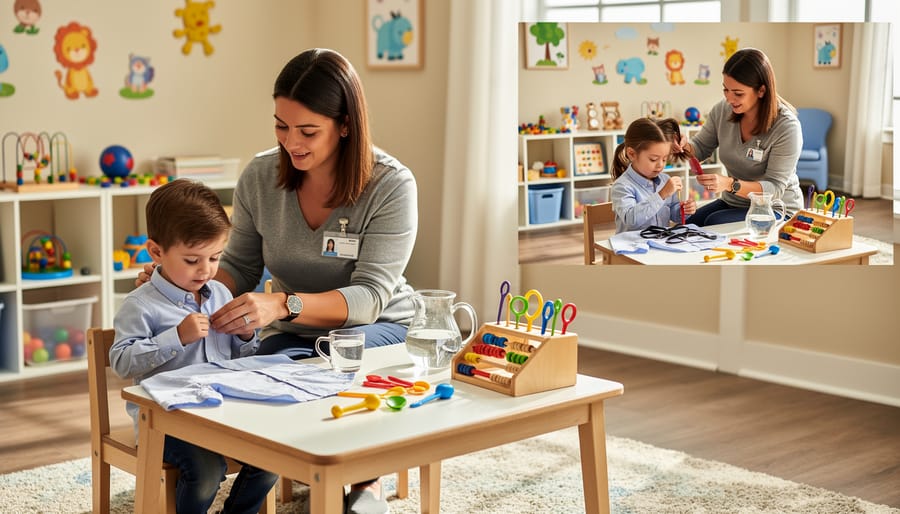
Self-care skills form the backbone of a child’s growing independence and confidence. Occupational therapists work with children to master the everyday tasks that many of us take for granted, getting dressed, using utensils, managing personal hygiene, and using the bathroom independently.
For younger children, therapy might start with basics like grasping a spoon, pulling up pants, or washing hands. As skills develop, therapists introduce more complex sequences: buttoning shirts, tying shoes, brushing teeth thoroughly, or preparing simple snacks. Each accomplishment builds on the last, creating a foundation for greater autonomy.
Therapists break these tasks into manageable steps, addressing any underlying challenges. A child struggling with dressing might need work on body awareness, sequencing, or fine motor control. Someone having difficulty with mealtimes might benefit from exercises that strengthen jaw muscles or reduce sensory sensitivities around food textures.
The approach is always personalized to each child’s current abilities and goals. Therapists use adaptive equipment when helpful, special utensils, buttoning aids, or clothing modifications, while working toward reducing these supports as skills improve. They also coach families on how to create supportive routines at home, turning daily activities into natural practice opportunities that reinforce what’s learned in therapy sessions.
Social Participation and Play
Play isn’t just fun, it’s how children learn to navigate the social world. Through play, kids practice taking turns, sharing, negotiating roles, and reading social cues. They learn to manage frustration when things don’t go their way and celebrate victories with others. For children who struggle with these interactions, pediatric occupational therapists work to build the foundational skills that make meaningful social participation possible.
Therapists address social participation through structured activities that gradually increase in complexity. A child might start with parallel play alongside peers before progressing to cooperative games that require communication and joint problem-solving. Sessions often incorporate real-world scenarios like playground dynamics, classroom group work, or birthday party situations where social demands can feel overwhelming.
Treatment targets specific skill gaps: recognizing facial expressions and body language, understanding personal space, initiating conversations, joining ongoing activities without disrupting them, and resolving conflicts appropriately. Therapists also help children develop flexibility, the ability to adapt when plans change or when play doesn’t match their expectations.
Parents notice progress when their child starts making friends more easily, gets invited to playdates, or participates in team activities with less anxiety. These gains extend beyond the therapy room, creating opportunities for genuine connection and belonging that support emotional wellbeing throughout childhood.
Cognitive and Academic Readiness
Cognitive skills form the foundation for learning, and occupational therapists work on these abilities through purposeful activities that don’t feel like traditional classroom instruction. A child might sort objects by color and size to build categorization skills, complete puzzles to strengthen visual planning, or follow multi-step craft projects to develop working memory and sequencing.
Attention is addressed through graduated challenges. Therapists might start with tasks lasting just minutes, gradually extending duration as the child builds stamina. They also teach strategies for filtering distractions and shifting focus between activities, mirroring the demands of a school day.
Problem-solving develops through hands-on experiences where children encounter obstacles and work through solutions. Building with blocks that don’t quite fit, navigating obstacle courses with changing rules, or adapting a game when something goes wrong all strengthen flexible thinking.
Pre-academic skills receive attention too. Occupational therapists address the physical and cognitive readiness needed for writing, cutting, organizing materials, and following classroom routines. They work on visual-motor integration so a child can copy from a board, letter formation before handwriting demands increase, and the organizational skills that help children track assignments and manage their materials independently.
What a Comprehensive Pediatric OT Program Looks Like
A quality pediatric occupational therapy program follows a structured yet flexible approach that puts your child and family at the center of care. Understanding what to expect can help you feel confident as you begin this journey together.
The process typically unfolds through these key stages:
- Comprehensive Initial AssessmentYour therapist conducts detailed observations and evaluations to understand your child’s current abilities, challenges, and sensory-motor patterns across different environments.
- Collaborative Goal-SettingTogether with your family, the therapy team identifies specific, meaningful outcomes you want to achieve, whether that’s independent dressing, improved handwriting, or better mealtime participation.
- Individualized Treatment Plan DevelopmentBased on assessment findings and your priorities, therapists design a personalized roadmap that addresses your child’s unique needs through targeted interventions.
- Regular Therapy SessionsYour child participates in activities that look like play but are carefully designed to build specific skills, with frequency and duration adjusted based on individual needs and response to treatment.
- Family Education and Home ProgramsTherapists equip you with strategies, activities, and modifications to support your child’s progress between sessions, making everyday routines opportunities for growth.
- Ongoing Progress MonitoringThe team regularly reviews your child’s development, adjusts goals as skills emerge, and modifies approaches to ensure continued meaningful progress.
Quality OT service delivery emphasizes an interdisciplinary approach, meaning your occupational therapist may collaborate with speech therapists, physiotherapists, educators, and other professionals working with your child. This coordination ensures everyone supports the same goals through complementary strategies.
Sessions themselves vary based on your child’s age and needs. Some children thrive in individual sessions, while others benefit from small group settings that build social skills alongside other developmental areas. The best programs adapt to your child rather than forcing them into a rigid format, recognizing that what works changes as your child grows and masters new skills.
Supporting Your Child’s Progress at Home
The partnership between therapy sessions and daily home life is where real progress takes root. Your occupational therapist will provide you with specific strategies tailored to your child’s goals, and weaving these into your everyday routines makes therapy principles come alive in natural contexts where skills matter most.
Start by incorporating recommended activities into moments you already share with your child. If your therapist suggests strengthening finger muscles, let your child help tear lettuce for salad or squeeze orange juice. When working on dressing skills, build in extra time during morning routines so your child can practice without pressure. These small, repeated opportunities throughout the day compound into meaningful gains.
Communication with your therapy team strengthens your home program support. Share what’s working and what feels challenging. Your observations at home provide valuable insights your therapist can’t see during sessions, and this feedback helps them adjust approaches to better fit your family’s reality.
Consistency matters more than perfection. Some days will flow smoothly, others won’t. What counts is showing up regularly with patience and maintaining realistic expectations. Your child is learning complex skills that typically-developing children master through countless repetitions, so progress may feel slow at times.
Celebrate every small victory. When your child buttons one button independently after weeks of practice, that’s genuine achievement. When they tolerate a texture they previously avoided, acknowledge the courage that took. These seemingly minor milestones are actually significant building blocks in your child’s development.
Remember that you’re not expected to become a therapist. Your role is to be your child’s loving supporter and advocate, creating an environment where practice feels safe and achievable. Trust the process, stay connected with your therapy team, and recognize that your involvement makes a profound difference in your child’s journey toward greater independence.
When to Seek Pediatric Occupational Therapy Services
Recognizing when your child might benefit from occupational therapy evaluation is an important part of supporting their development. Every child grows at their own pace, but certain patterns can signal that professional support would be helpful. These signs are not causes for alarm, but rather opportunities to provide your child with tools and strategies that can make daily life easier and more enjoyable.
Parents often notice challenges in everyday situations that might prompt an OT evaluation:
- Difficulty completing age-appropriate self-care tasks like buttoning, using utensils, or tying shoes
- Unusual responses to sensory input, such as covering ears in normal noise environments or avoiding certain textures
- Struggles with handwriting, cutting with scissors, or other fine motor tasks
- Difficulty with coordination, balance, or participating in physical activities with peers
- Challenges engaging in social situations or understanding personal space
- Delays in reaching developmental milestones compared to typical age ranges
Teachers may also observe difficulties with attention, organization, or participating in classroom activities that suggest an OT evaluation could be beneficial. If your pediatrician, teacher, or your own instincts indicate that your child is struggling with daily activities, seeking an evaluation is a positive, proactive step. Early intervention often leads to better outcomes because children can develop helpful skills and strategies while their brains are most adaptable. Occupational therapists work closely with families to understand each child’s unique needs and create personalized approaches that support their growth and independence.
Pediatric occupational therapy works because it addresses child development as a whole, not in isolated pieces. By focusing on sensory processing, motor skills, self-care abilities, social participation, and cognitive readiness together, occupational therapists help children build the foundational capabilities they need to thrive at home, school, and in their communities.
What makes this approach particularly effective is its personalized nature. Every child brings unique strengths, challenges, and goals to therapy. Through careful assessment and ongoing collaboration, therapists design interventions that meet each child exactly where they are and move them forward at their own pace. This individualized care, combined with an interdisciplinary approach that brings together multiple perspectives and specialties, creates the conditions for meaningful progress.
Your partnership matters profoundly in this process. The relationship between therapists, children, and families transforms therapy from something that happens during scheduled sessions into a continuous journey toward greater independence and confidence. When you reinforce skills at home, celebrate small victories, and maintain open communication with your child’s care team, you amplify the impact of every intervention.
If you’re considering occupational therapy for your child, know that seeking support is a positive, proactive step. With the right foundation in place, children can achieve remarkable growth in their ability to participate fully in the activities that matter most to them and their families.